7 Signs a Business Without a Website Is Ready for a Sales Pitch
Table of Contents
A business without a website can look like an easy sales opportunity, but not every one is worth contacting.
Search Google Maps, check social media, and you’ll find plenty of businesses with no website. The real question is whether they’re showing signs that a website could actually help them grow.
The problem starts when you need to do it every day.
Not every business without a website is a good prospect. Some are happy with referrals. Some don’t need more customers. Others may simply have no interest in building a website right now.
So the better question isn’t:
“Does this business have a website?”
It’s:
“Is this business showing signs that a website could actually help them?”
That’s what makes prospecting more useful.
A business that is active on social media, getting strong reviews, expanding its services, or investing in marketing has a reason to care about its online presence.
Those are the businesses worth looking at first.
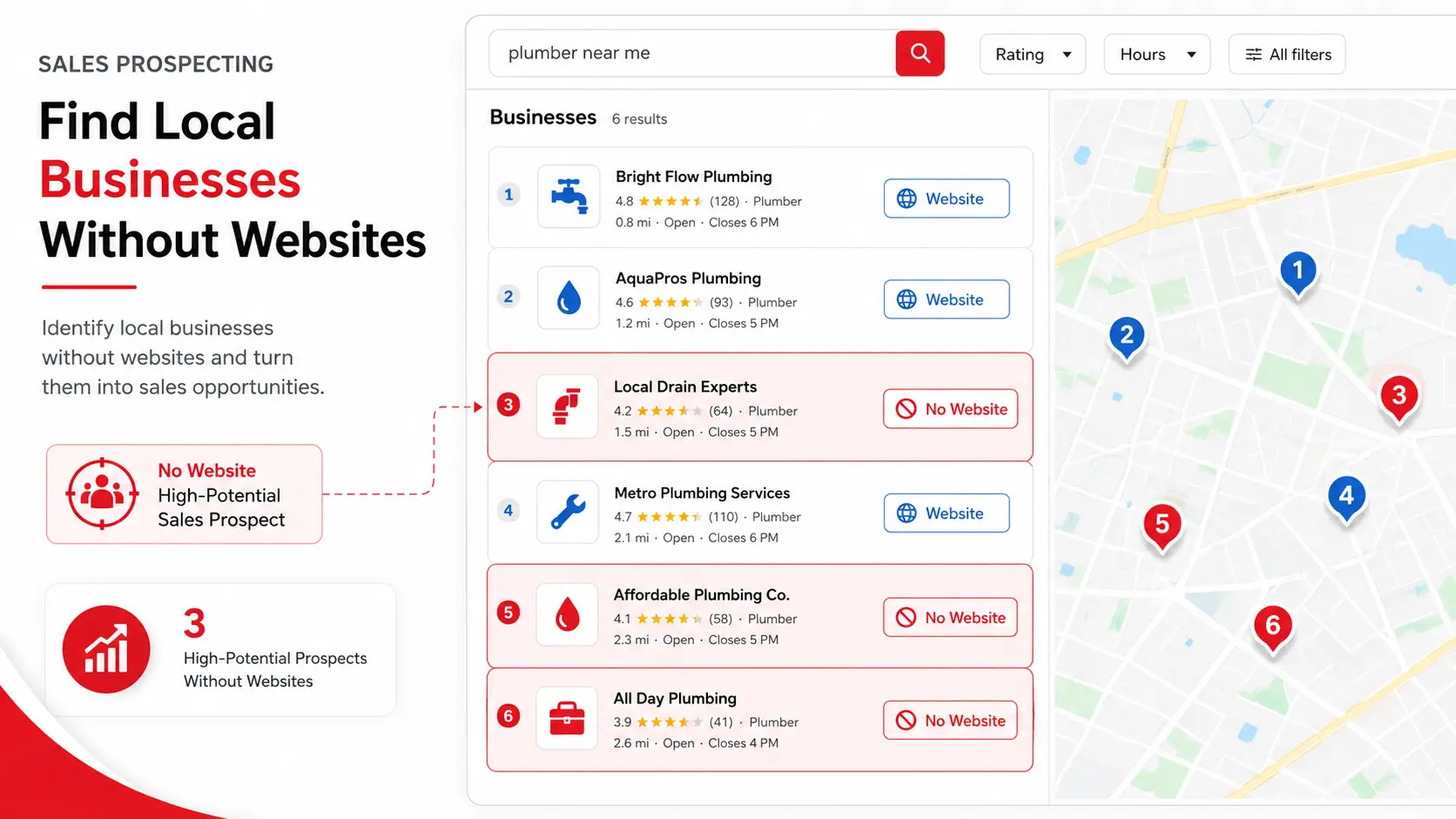
And once you know what signals to look for, you can use Targetron to find and organize businesses by category, location, and available business data instead of starting every search from scratch. Targetron’s local business directory supports category and location searches, advanced filters, contact information, and exports for prospecting.
Quick Answer: 7 Signs a Business Without a Website Is Ready for a Sales Pitch
- No website, only social media.
- Customers can’t find key information.
- They’re already investing in marketing.
- Competitors have better online presence.
- They have strong reviews but no website.
- The business is growing.
- They’re actively engaging with customers.
Find businesses like these faster with Targetron.
1. They Rely on Social Media Instead of a Website
This is probably the easiest signal to spot.
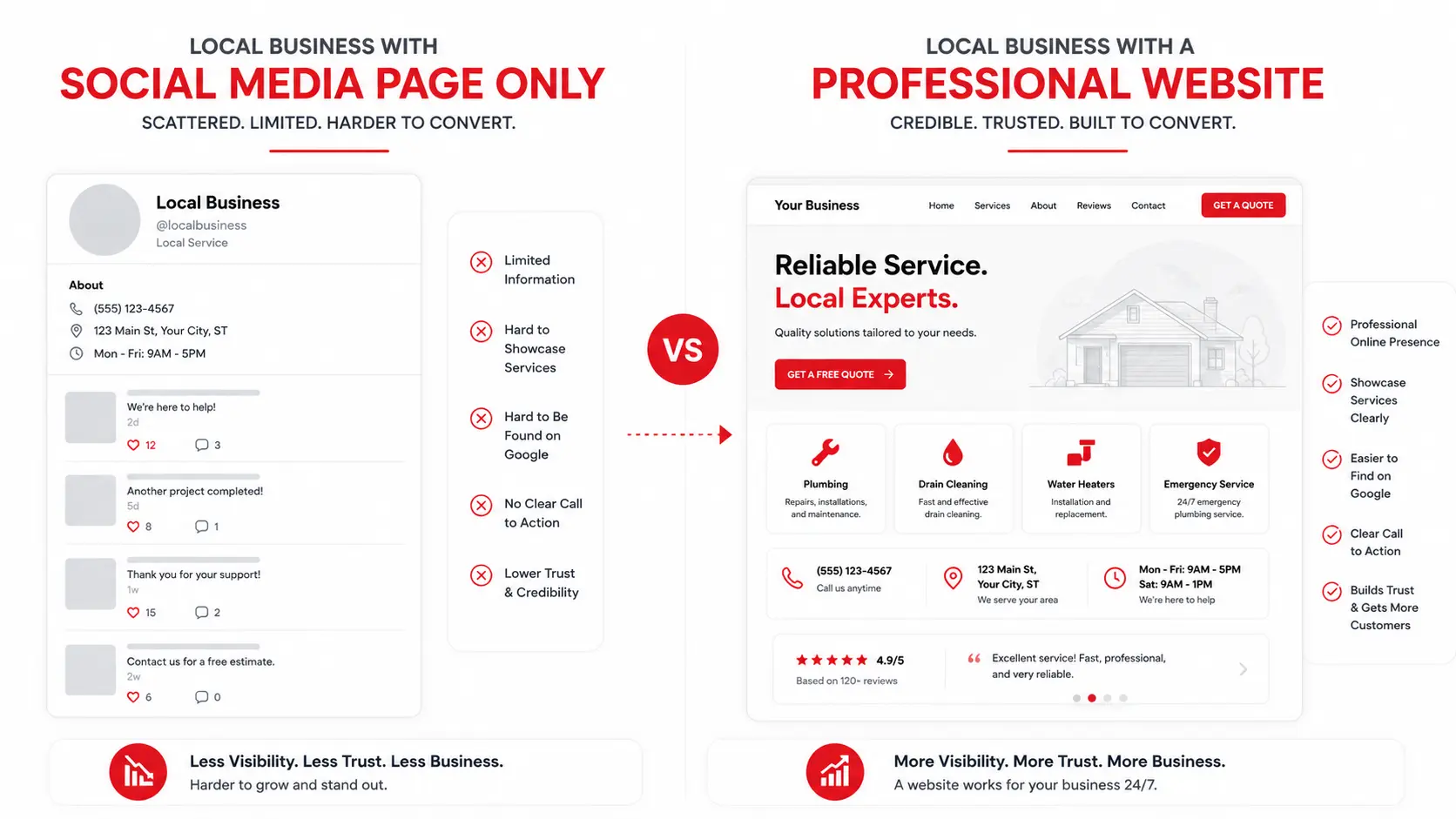
The business has a SOCIAL MEDA PAGE. They post regularly. They share products, promotions, customer photos, or updates.
But there is no website.
That doesn’t automatically mean they’re ready to buy.
What matters is the effort they’re already putting into their online presence.
If a business is consistently posting and responding to customers, they’ve already shown that being visible online matters to them.
The missing website becomes more interesting.
Social media is useful for getting attention, but important information can easily get buried. Customers may have to scroll through old posts to find services, hours, contact details, or information about what the business actually offers.
A website gives the business one place to organize that information.
So instead of pitching:
“You don’t have a website.”
Try:
“I noticed you’re active on SOCIAL MEDIA, but customers don’t have one place to see your services and contact you. We had a few ideas that could make that easier.”
That’s a better conversation because you’re talking about something you’ve actually noticed.
What to check before contacting them
Look at:
- How often they post
- What they promote
- Customer comments
- Their services
- Whether their contact information is easy to find
You don’t need a ten-minute investigation for every prospect.
You just need enough context to understand why your offer might make sense. Targetron’s local business contact data can help you review available business details before outreach.
2. Customers Can't Find Key Information
Search for the business like you’re a customer.
Can you quickly find:
- What they offer?
- Where they’re located?
- Their hours?
- How to contact them?
- What makes them different?
If you have to dig through posts or search multiple websites to answer basic questions, that’s a useful sales signal.
Customers don’t always want to send a message just to ask something simple.
Before outreach, review available business information such as contact details, website information, and other relevant fields.
When that information isn’t easy to find, some customers will simply move on.
That’s the problem you can bring into the sales conversation.
Instead of saying:
“You need a website.”
Say:
“I noticed customers have to message you to find some of your basic service information. A website could put everything in one place.”
The difference is small, but important.
You’re not selling a website.
You’re pointing out a customer experience problem that a website could help solve.
3. They're Already Investing in Marketing
This is a stronger signal than simply having no website.
Look at what the business is already doing.
Are they:
- Running promotions?
- Posting consistently?
- Running ads?
- Creating videos?
- Working with influencers?
- Launching new products?
- Participating in local events?
If they’re already putting time or money into getting attention, they may be more open to something that helps turn that attention into inquiries.
Think about the customer journey.
Someone sees a post.
They’re interested.
They want to learn more.
Where do they go?
If the answer is only Facebook Messenger or a phone number, there may be a gap.
A website gives interested customers somewhere to go next.
That makes your pitch much more relevant.
You’re not asking them to start marketing.
They’re already doing it.
You’re showing them another way to support what they’re already doing.
For example:
“I noticed you’re actively promoting your business online. A website could give those promotions somewhere to send people who want to learn more.”
That’s much stronger than a generic:
“We build websites for businesses.”
Still searching for businesses one by one?
Use Targetron to find businesses by industry and location, then build a focused list for your website outreach.
4. Their Competitors Have a Better Online Presence
This one requires a little more research.
Search the business and compare it with two or three competitors.
You might find that the competitors have:
- Professional websites
- Service pages
- Contact forms
- Online booking
- Testimonials
- Better search visibility
Meanwhile, your prospect has only a social media page.
That’s a clear gap.
But don’t use that gap to make the owner feel bad.
You don’t need to say:
“Your competitors are better.”
Instead, make the observation useful.
For example:
“I was looking at businesses in your area and noticed several competitors are making it easier for customers to view their services and contact them online. I had a few ideas that could work for your business too.”
Now you’re starting a conversation.
This is also why research matters before outreach.
The more you understand about the business, the easier it is to write something that doesn’t sound copied and pasted.
You don’t need to research every prospect for an hour.
A few relevant observations can be enough.
5. They Have Strong Reviews but No Website
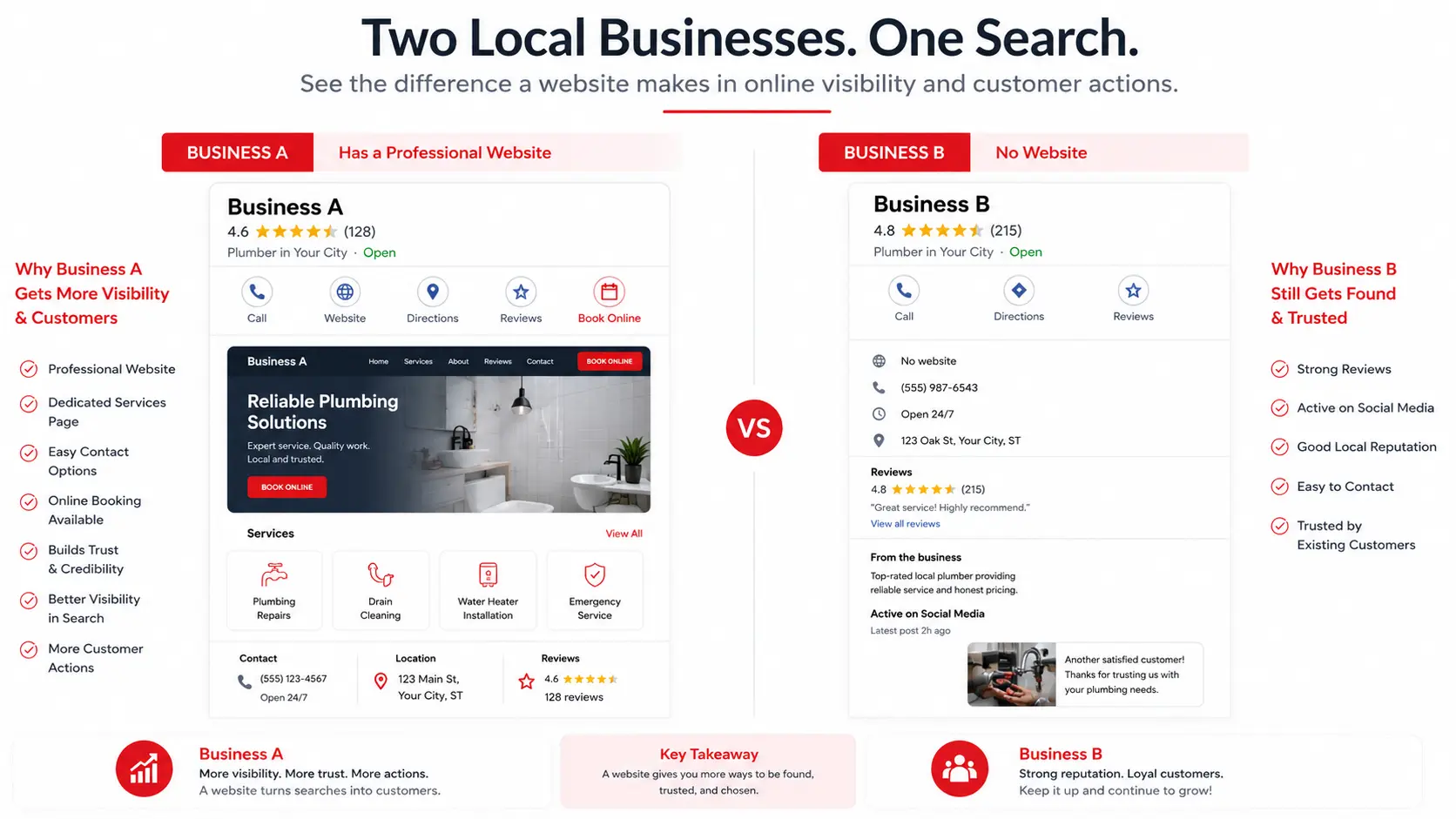
This is one of the better signals because the business has already built trust.
Imagine finding a company with dozens of positive reviews but no website.
Customers clearly like the business.
People are recommending them.
The company has a reputation.
But new customers still have limited information about what the business offers.
That’s where the opportunity comes in.
Before contacting them, read a few reviews.
Look for patterns.
Maybe customers repeatedly mention:
- Great service
- Fast responses
- Friendly staff
- Professional work
- Quality products
Those details can make your outreach much more personal.
Instead of:
“I can build you a website.”
You could say:
“I noticed several customers mention how quickly your team responds. A website could make it easier for new customers to find your services and contact you.”
You’re starting with something positive.
That’s a much better way to approach a business owner than opening with everything they don’t have.
6.They’ve Recently Expanded Their Services
Growth is another strong signal.
Maybe the company recently:
- Added a new service
- Opened another location
- Started serving a new area
- Hired more employees
- Added new products
- Started targeting commercial customers
But their online presence hasn’t changed.
Their social media page may still describe the business the same way it did years ago.
There’s a mismatch.
If you’re researching companies by market or location, Targetron’s B2B local leads directory can help you build the initial list before reviewing these growth signals manually.
That’s a natural reason to bring up a website.
For example:
“I saw that you’ve recently expanded your services. It looks like the business has grown quite a bit. A website could help you show everything you’re offering now and make it easier for new customers to find you.”
You’re connecting the pitch to something that’s already happening.
That’s the important part.
Don’t invent a problem just to sell.
Find a real signal, then explain where your service could fit.
7. They're Already Engaging With Customers
Look at how the business interacts with people online.
Do they:
- Reply to comments?
- Answer reviews?
- Respond to questions?
- Update customers?
- Post regularly?
If they do, it tells you something.
They care about communication.
A website can extend that communication beyond social media.
Customers could use it to:
- View services
- Read FAQs
- Request a quote
- Book an appointment
- Find contact information
- Learn more about the company
Again, don’t lead with the website.
Lead with what you’re seeing.
For example:
“I noticed you’re very responsive to customer questions online. A website could give people a place to find common information before they need to message you.”
That makes the website part of the solution instead of the entire pitch.
Found the signs? Now find the prospects.
Use Targetron to build targeted business lists and review the data you need before deciding who to contact.
How Targetron Fits Into This Prospecting Process
The seven signs help you decide who is worth contacting.
Targetron helps with the earlier part:
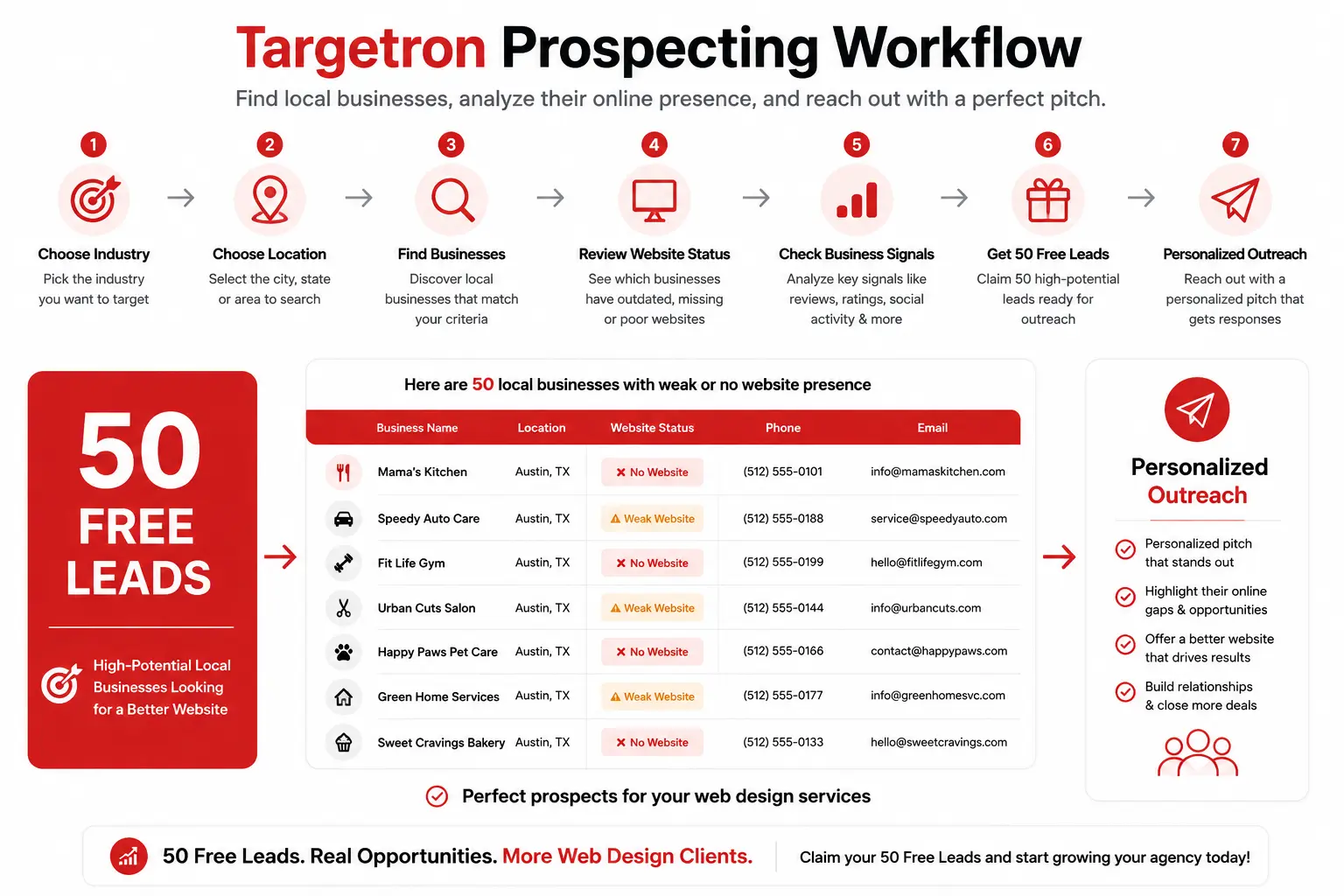
Targetron helps with the earlier part: building the initial prospect list. You can use the Targetron business directory to search for businesses by category and location before reviewing which ones fit your outreach criteria.
That distinction matters.
Targetron isn’t deciding whether someone will buy a website from you.
You still need to research the business and decide whether the opportunity makes sense.
What Targetron can do is reduce the time spent building the initial business list.
Start With Your Market
First, decide who you want to sell to.
For example:
- Roofing companies
- Gyms
- Restaurants
- Contractors
- Dental clinics
- Real estate businesses
- Local professional services
Don’t start by searching for “any business without a website.”
Start with the type of client you actually want.
Choose a Location
Next, narrow the market.
You can search by locations supported by Targetron’s directory, including cities, ZIP codes, states, and countries.
This makes your prospecting more focused.
For example:
Industry: Roofing
Location: Texas
Or:
Industry: Dental clinics
Location: Florida
Now you have a market instead of a random list.
Review the Business Data
Targetron’s local business data can include company names, categories, websites, phone numbers, emails where available, social profiles, ratings, reviews, and other business fields.
That gives you information to work from before outreach.
And one field is especially relevant to this article:
website
You can use the available website information as part of your prospect qualification, then manually review the businesses that fit your criteria.
Apply the Seven Signs
This is where your human judgment comes in.
A prospect with:
No website + active social media + strong reviews
is more interesting than:
No website + no online activity.
A prospect with:
No website + recent growth + active marketing
may deserve even more attention.
The point isn’t to blindly pitch every company.
It’s to prioritize.
Export and Start Outreach
Once you’ve narrowed the list, Targetron lets you export business data in formats such as CSV, XLSX, JSON, or Parquet depending on the available plan and workflow.
Then you can move the list into your sales process.
But don’t skip the human part.
Look at the business.
Find one relevant detail.
Write a short message.
Ask for the next step.
That’s where the actual sales conversation starts.
Common Mistakes When Pitching Businesses Without a Website
Assuming Every Business Needs a Website
No website doesn’t automatically mean buying intent.
The seven signals matter because they give you more context.
Sending the Same Message to Everyone
If every message starts with:
“I noticed you don’t have a website.”
you’re going to sound like everyone else.
Find something specific.
Talking About Features Instead of Results
Business owners don’t necessarily care about technical website features.
They care about what the website can do for the business.
Talk about:
- Easier customer contact
- Better information
- More inquiries
- Supporting existing marketing
- Making the business easier to find
Trying to Close Immediately
Your first message doesn’t need to close the deal.
Ask for the next step.
A short call.
A quick audit.
A few ideas.
A follow-up.
The sales approach in your source material also emphasizes moving the prospect toward the next step rather than trying to force the entire sale immediately.
Skipping Research
If you haven’t looked at the business, your message will probably sound generic.
Research first.
Then personalize.
Even a small amount of preparation can make your outreach feel more relevant.
Ready to turn your research into outreach?
Stop spending hours building prospect lists manually. Use Targetron to find businesses by industry and location, organize your leads, and move faster from research to outreach.
FAQ
Most frequent questions and answers
Start with a specific industry and location, then check the businesses that don’t list a website. Targetron can help you search and filter local businesses and export the results for prospecting..
They can be. The strongest prospects usually show another reason to improve their online presence, such as active marketing, strong reviews, growth, or customer engagement.
Keep it short. Mention something specific you noticed, explain the opportunity, and ask whether they’re open to hearing an idea.
Either can work. What matters more is choosing businesses that fit your offer and giving them a relevant reason to respond.
Yes. Targetron’s business directories let you search by category and location, apply available filters, review business information, and export prospect data for outreach.
Yes. Targetron lets you find businesses without websites using advanced search filters. You can narrow the results by industry and location, then export available business details such as company names, phone numbers, addresses, and social profiles.
This is especially useful for web design, local SEO, and marketing agencies looking for businesses that may need help building or improving their online presence. Learn more in our guide to finding businesses without websites.
 Written by
Dan Dades
Written by
Dan Dades