The Complete Client Acquisition Guide for New Agencies and Freelancers
Table of Contents
Important Note: Client acquisition methods can help organize prospect research and outreach, but they do not guarantee clients, replies, meetings, or sales. Results vary based on your offer, market, targeting, positioning, timing, and execution.
Getting your first few clients usually starts with a simple problem: finding businesses that are relevant to what you offer and giving them a clear reason to talk to you.
New agencies and freelancers often spend too much time polishing branding, rebuilding their website, or collecting huge prospect lists before speaking with potential clients.
A practical acquisition process is smaller:
Choose a market → Find relevant businesses → Research them → Start conversations → Follow up → Review results
Targetron can support the research stage by helping you explore available business records based on criteria such as category, location, and other available business information.
Build Your First Prospect Research List
Explore businesses by market and location, then review the records that fit your client criteria.
Quick Answer: How Can a New Agency Start Client Acquisition?
Define one clear service and target market.
Choose the businesses most likely to fit that service.
Build a focused research list.
Review each company before outreach.
Contact the appropriate person with a relevant message.
Follow up and track responses.
Use real campaign results to refine your targeting.
Start small enough that you can actually research the businesses on your list.
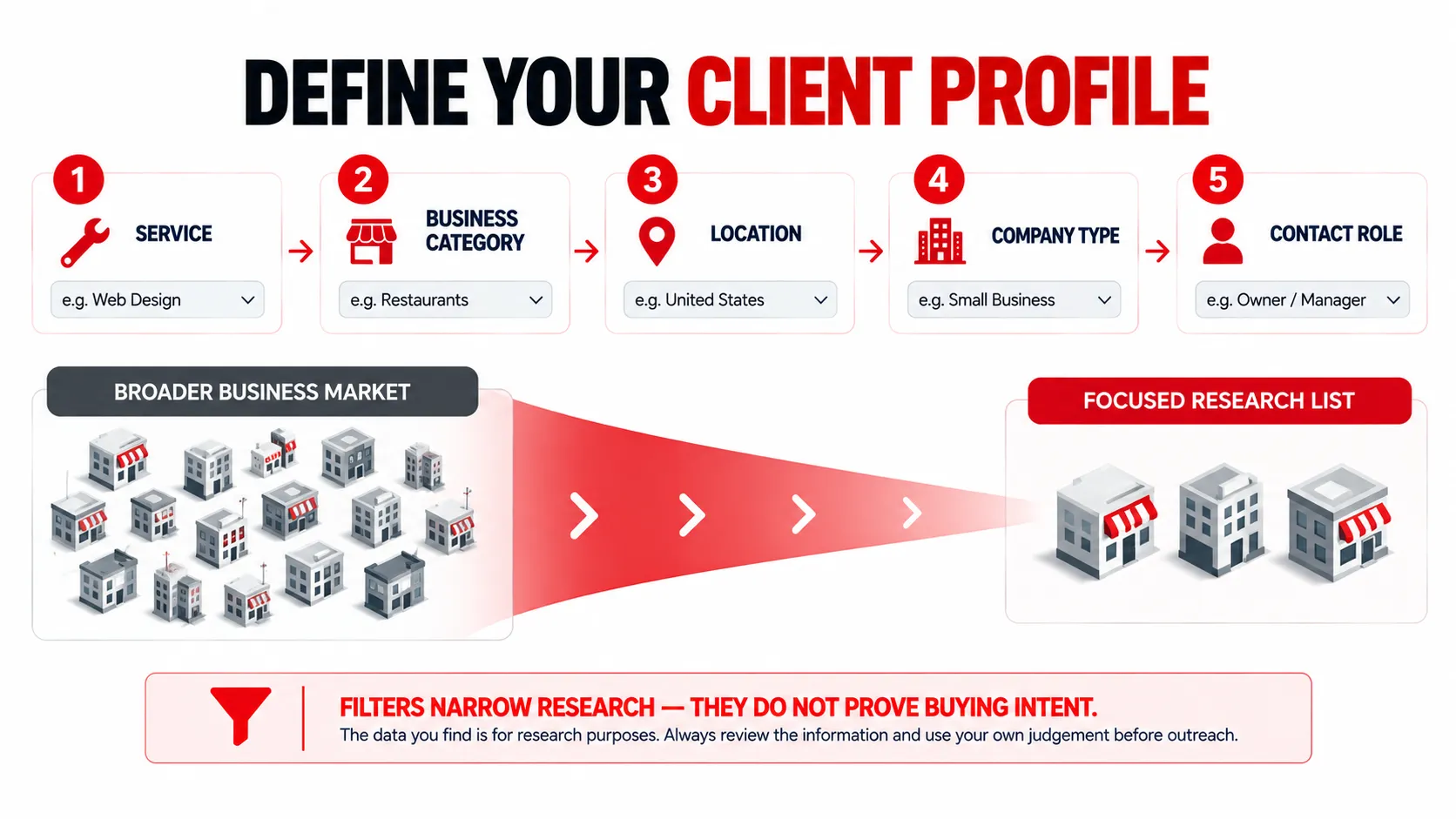
1. Define the Client You Want to Work With
Start with the service you are selling.
For web design, your target market might include restaurants, clinics, home-service companies, or another category where you understand the business well.
Agencies offering paid advertising, SEO, video production, or automation can instead focus on markets where those services have a clear use case.
Write down:
- Service
- Business category
- Location
- Company size or type
- Relevant business characteristics
- Roles you may need to contact
For example:
Service: Website redesign
Market: Local dental clinics
Location: Dallas
Research criteria: Operational businesses with available website information
That gives you a concrete starting point for identifying the client you want to work with.
If you want a more structured approach to defining the market, use Targetron’s guide to finding B2B leads that match your ICP.
2. Build a Focused Prospect Research List
Once the market is clear, build a list of businesses that fit those basic criteria.
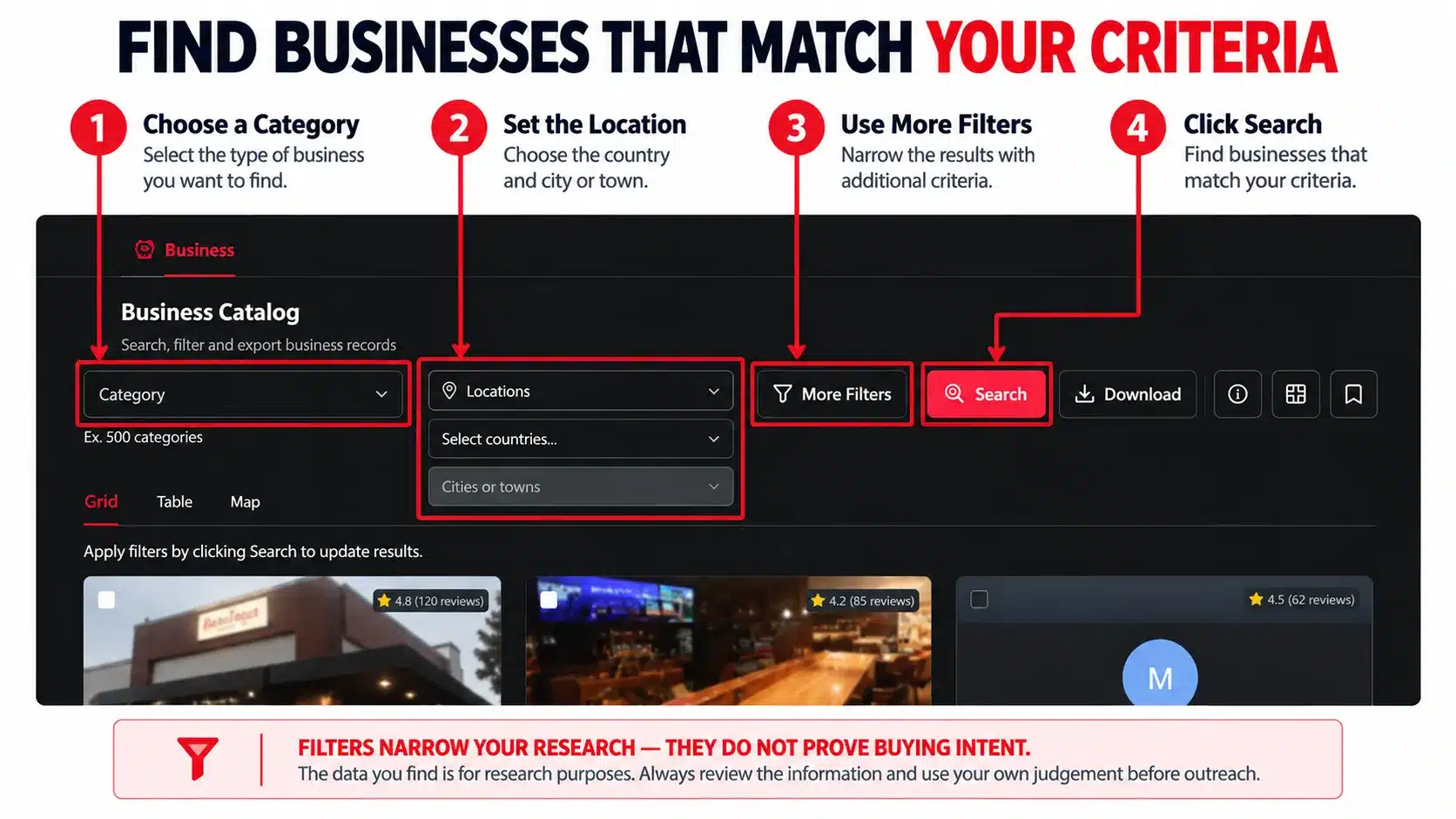
Targetron’s Business Catalog can help narrow available records by business category, location, and other available information.
For example, you could begin with:
Category → Location → Business Status → Relevant Filters → Search
Then review the returned businesses.
A list of 50 carefully selected companies can be easier to work with than thousands of records you have never reviewed.
The practical question is:
Can I explain why this specific business belongs on my research list?
Ask yourself one question during the client review: Can I explain why this specific business belongs on my research list?
Clear relevance gives you a reason to continue researching the business. When the connection to your service appears weak, move to another record.
For additional ways to build prospect lists without relying immediately on large purchased databases, see free B2B lead generation methods.
Research businesses before starting outreach
Use Targetron to narrow available business records by the criteria relevant to your service and market.
3. Research Each Business Before Outreach
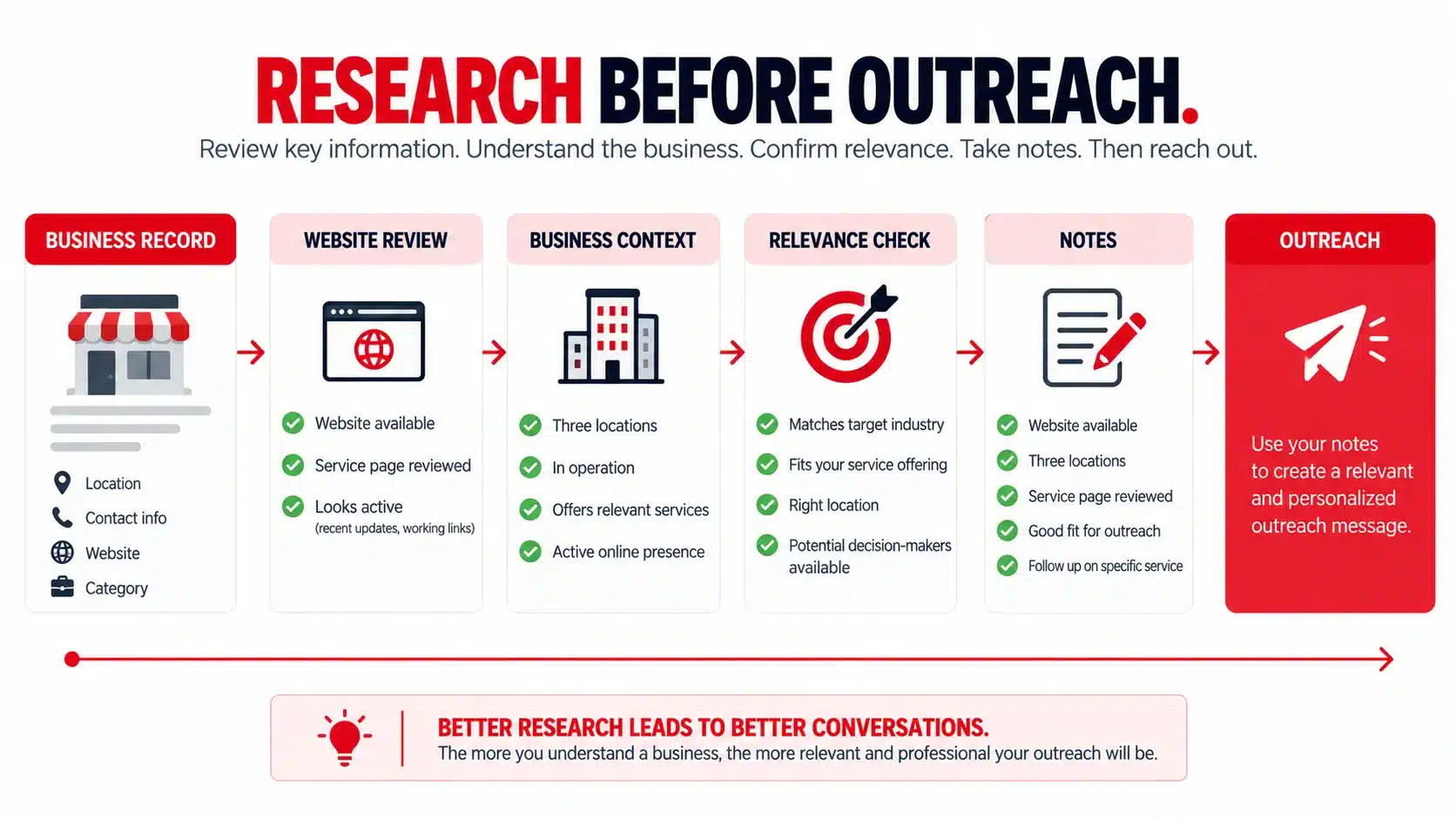
Open the businesses on your research list and look for information that helps you identify potential clients and understand whether your service could be relevant to them.
For a web-design campaign, you might examine:
- Website availability
- Important pages
- Mobile experience
- Contact paths
- Business information
- Location pages
- Service presentation
For a local SEO campaign, your research may include:
- Location
- Website information
- Business category
- Ratings
- Reviews
- Public business information
Turn Your Research Into Specific Observations
Write factual observations.
Instead of writing:
“They need a new website.”
Record:
“The current website has no clear service page for X.”
Instead of:
“They need SEO.”
Record:
“The business serves three locations, but only one location page was found during review.”
Specific observations give you material you can later use in a relevant conversation.
4. Find the Appropriate Contact and Start a Relevant Conversation
After researching the business, identify the person whose role is most relevant to your service.
Possible contacts include:
- Founder
- Owner
- Marketing manager
- Operations manager
- Sales leader
- Another relevant decision-maker
The best contact depends on the company, its structure, and what you offer. Targetron’s guide to finding B2B contacts by job title can help with role-based contact research.
Before outreach, verify important details using a process such as B2B contact verification.
Keep the First Message Simple
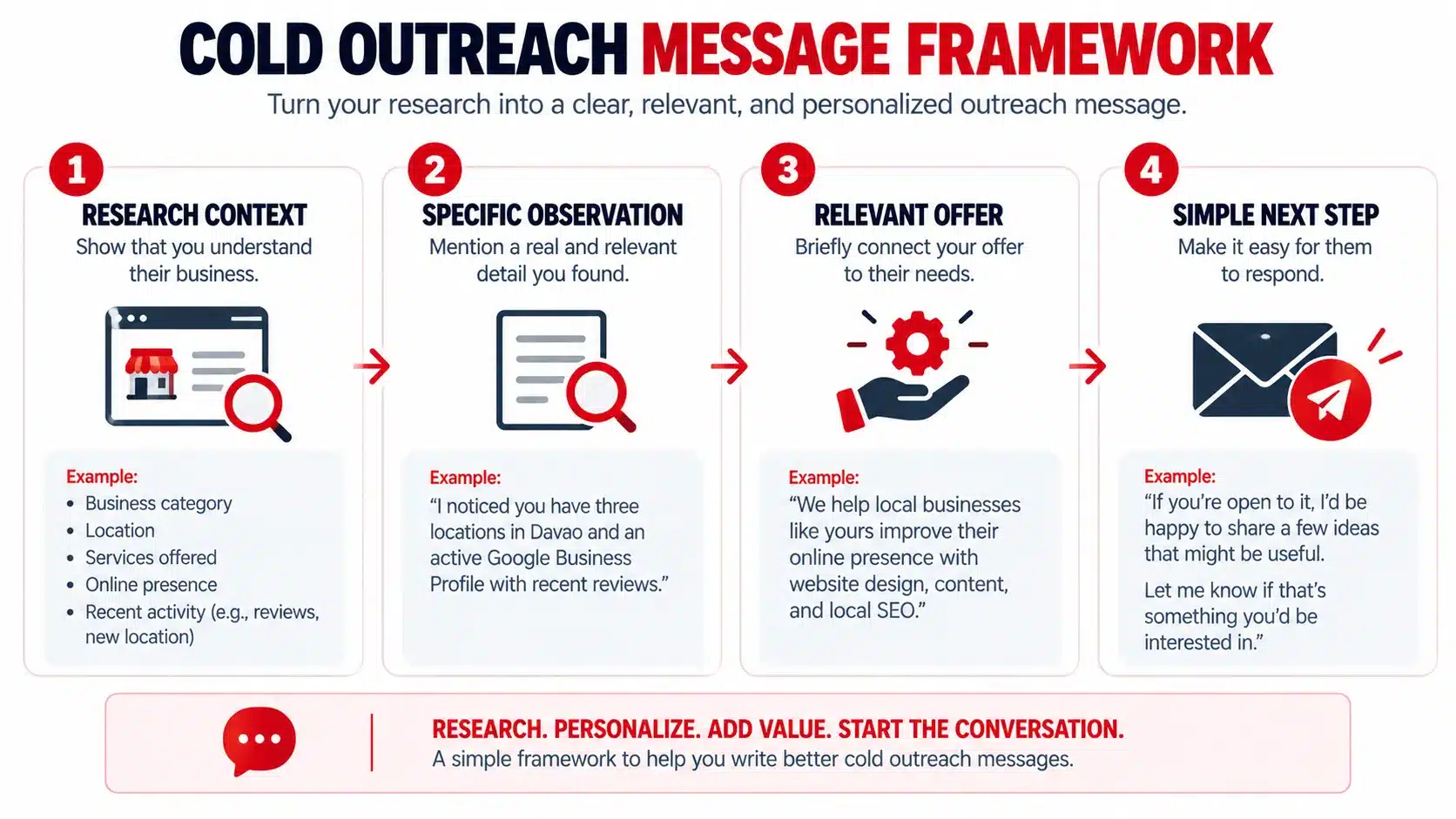
Build the message around four elements:
Reason for contacting them → Specific observation → Relevant service → Easy next step
For example:
Hi Sarah, I was reviewing dental clinics in Dallas and noticed that several service pages on your website lead visitors to the same general contact flow. I work on conversion-focused websites for local businesses and put together a quick idea for simplifying that journey. Would it be useful if I sent it over?
Specific research gives the message context without guessing about the company’s budget, priorities, or internal problems.
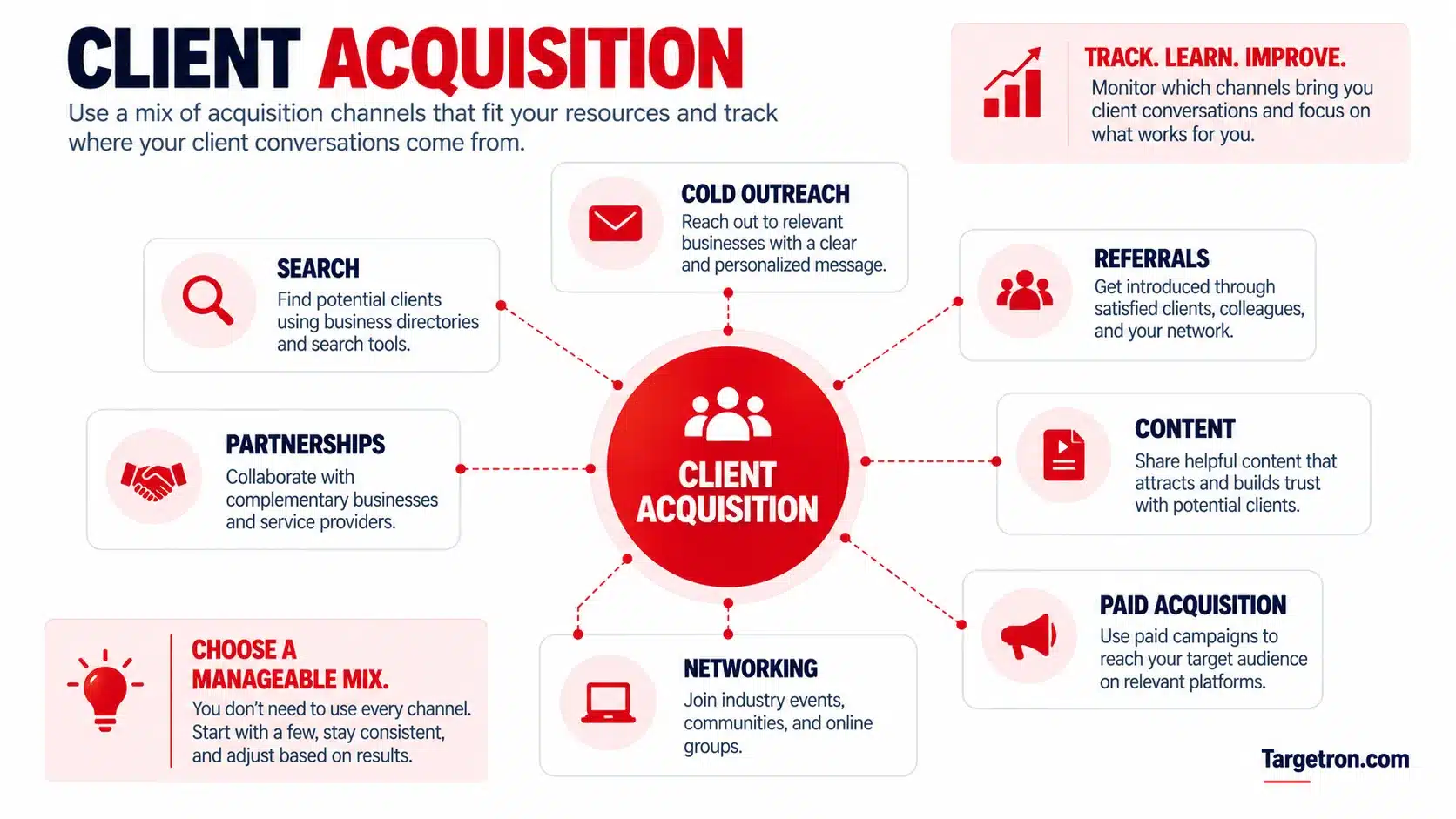
5. Use More Than One Client Acquisition Channel
Relying on a single channel can limit the opportunities your agency or freelance business can explore. A practical client acquisition strategy can combine a few channels that match your target market, available time, and budget.
Useful client acquisition channels include:
- Cold outreach
- Referrals
- Networking
- Educational content
- Partnerships
- Search visibility
- Industry communities
- Paid acquisition
Start with a small combination you can manage consistently. For example, a new agency could use cold outreach + referral requests + weekly case-study content. This creates several ways for potential clients to discover or interact with the business without spreading your effort across every available channel.
Track where conversations with potential clients originate. If cold outreach generates relevant conversations, refine your prospect research and messaging. If referrals produce stronger opportunities, spend more time developing relationships with past clients, partners, and professional contacts.
Explore another approach to prospecting in Targetron’s B2B lead generation vs. manual prospecting guide.
The U.S. Small Business Administration also provides resources on marketing and sales planning for small businesses.
6. Track Conversations and Refine Your Process
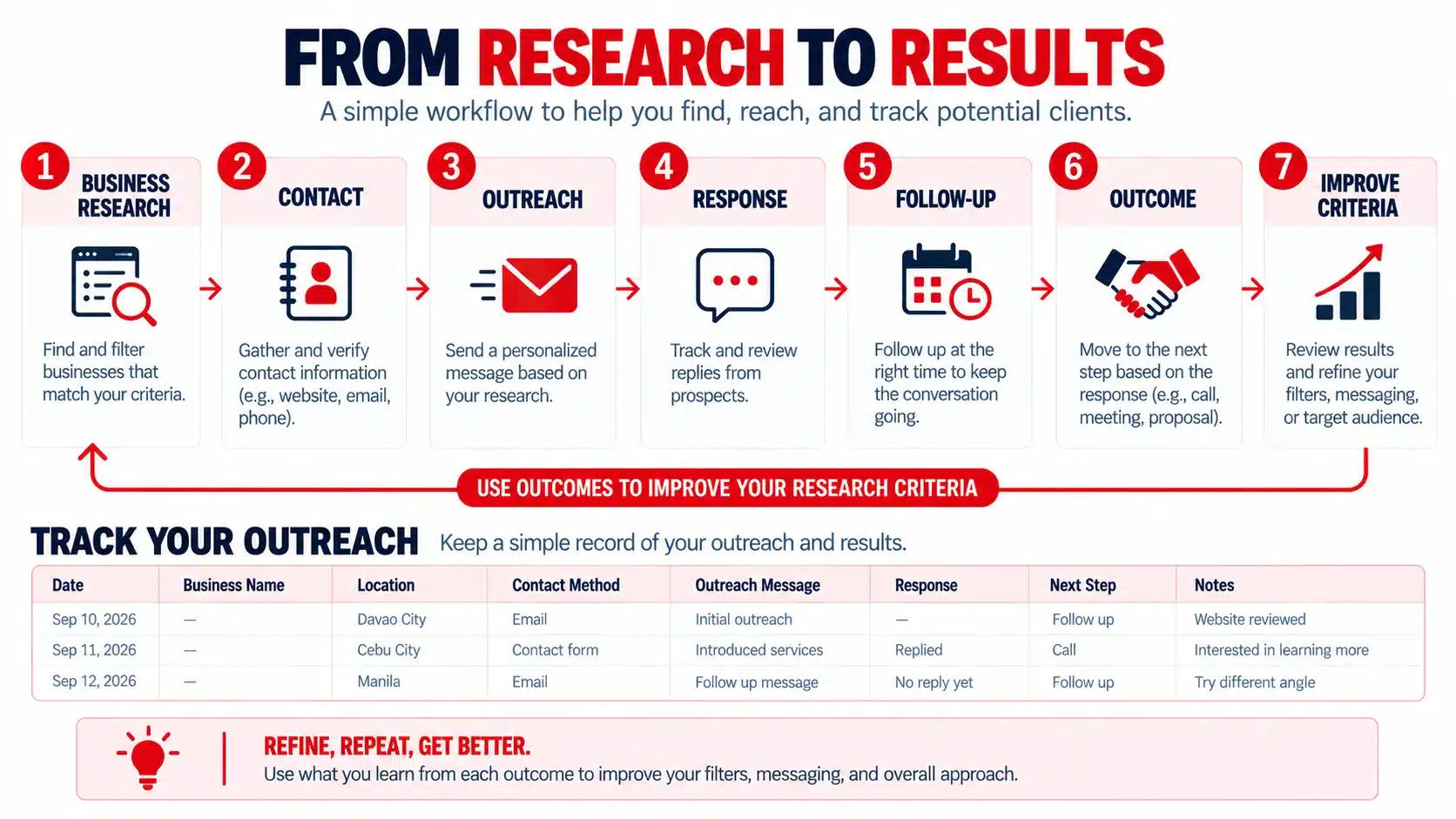
Create a simple tracking system.
You can use a spreadsheet or CRM with fields such as:
| Field | Example |
|---|---|
| Business | Company being researched |
| Reason selected | Why it matched your criteria |
| Contact | Relevant person |
| Outreach date | Date contacted |
| Response | Reply status |
| Follow-up | Next action |
| Outcome | What happened |
After a reasonable sample of outreach, review the patterns.
Irrelevant responses can point to a targeting problem. Revisit the business criteria and refine the market.
Relevant conversations that repeatedly stall may signal an issue with the offer or next step. Compare what happens after prospects respond.
Low engagement is another reason to review your research and personalization. Look for differences between messages that received attention and those that did not.
Actual responses provide useful information for improving your targeting and outreach.
Targetron’s lead scoring guide for small businesses can also help you organize prioritization criteria before outreach.
Start With a Focused Prospect Research List
Choose the businesses that match your market, review the available information, and use that research to guide your next outreach campaign.
FAQ
Most frequent questions and answers
Client acquisition is the process of finding potential clients, starting conversations, evaluating fit, and developing relevant opportunities.
Choose one service and target market. Research relevant businesses and begin focused outreach. Targetron’s free B2B lead generation methods provides additional approaches.
Start with a manageable list that gives you enough time to research each business and personalize your outreach.
Look for the person whose role is most relevant to your service, then verify their contact information before outreach.
Both can support client acquisition. Outreach starts direct conversations, while content helps demonstrate your expertise.
Depending on your service, this could be an owner, founder, marketing manager, operations manager, or another relevant decision-maker. See Targetron’s B2B contacts by job title guide
Targetron helps you explore business records using criteria relevant to your prospect research. Start with the Targetron Business Directory
 Written by
Dan Dades
Written by
Dan Dades