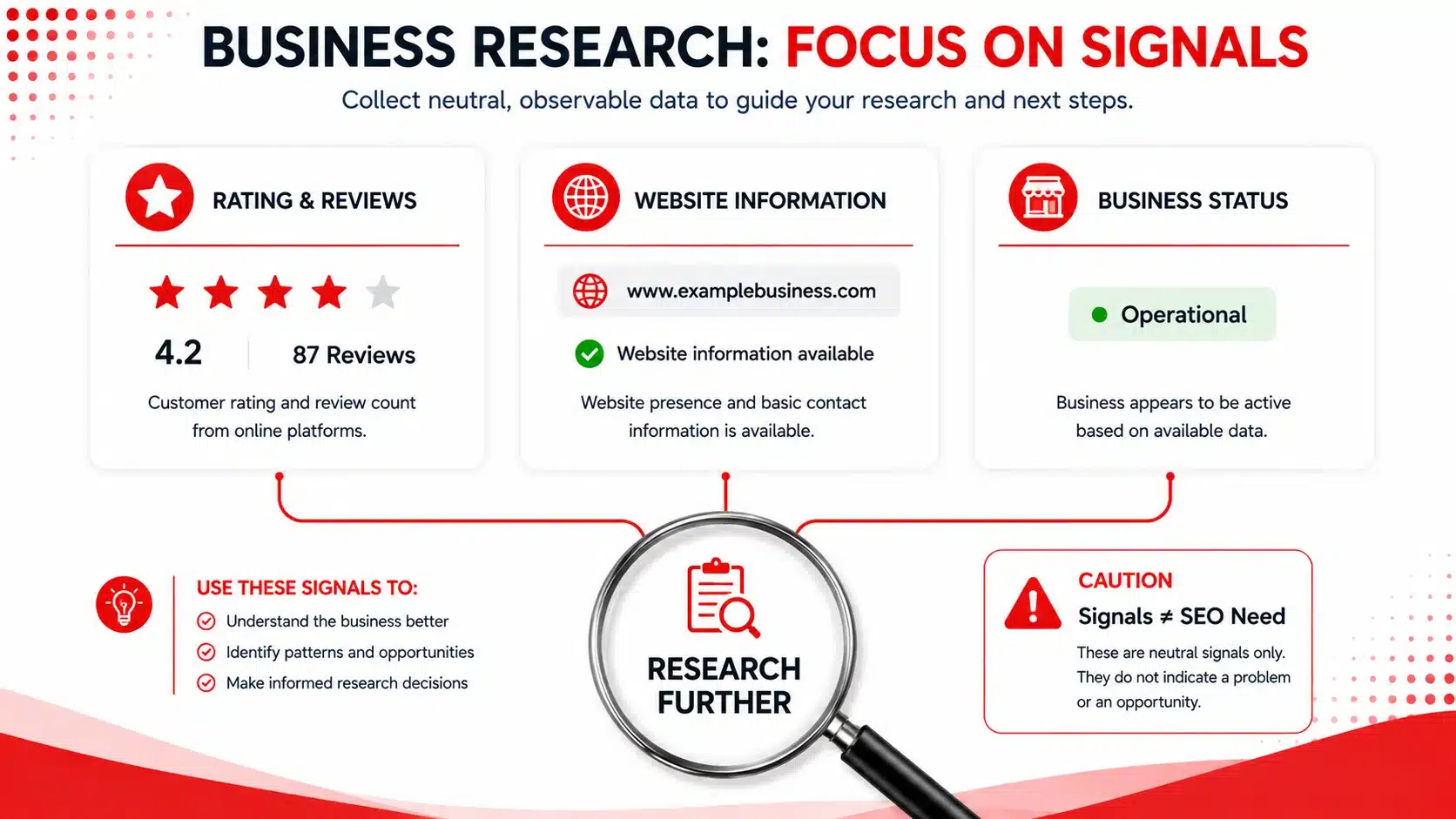
Important Note: A lower rating, available website information, or operational business status does not prove that a business needs SEO, has buying intent, or is interested in outreach. These signals should be treated as research criteria. Any listed website should be reviewed separately before drawing conclusions about the business or its online presence.
Local SEO prospect research becomes harder when agencies start with a huge market and review businesses without clear criteria.
Instead of assuming that every low-rated business represents an opportunity, agencies can use ratings, review counts, location, category, business status, and available website information to narrow the businesses they want to investigate.
Targetron can support the discovery stage by helping agencies search available business records using criteria relevant to their campaigns.
The purpose is to create a focused research list, not automatically identify businesses that need SEO.
A lower rating combined with available website information can provide a useful starting point for local business research.
Neither signal proves that a company needs SEO.
Ratings provide information about customer experiences, while a listed website gives an agency another source it can investigate.
A safer research framework is:
Lower rating + website information + operational business → research further
The important part is research further.
A lower rating does not establish that SEO is responsible for the business’s customer feedback. Reviews can relate to service, pricing, wait times, product quality, staff interactions, or other aspects of the customer experience.
Google’s guidance on customer reviews provides additional context on how businesses can approach positive and negative feedback.
Website information also requires verification. A website URL appearing in a business record does not prove that the website is currently accessible, maintained, optimized, or relevant to an SEO campaign.
Consider the surrounding information:
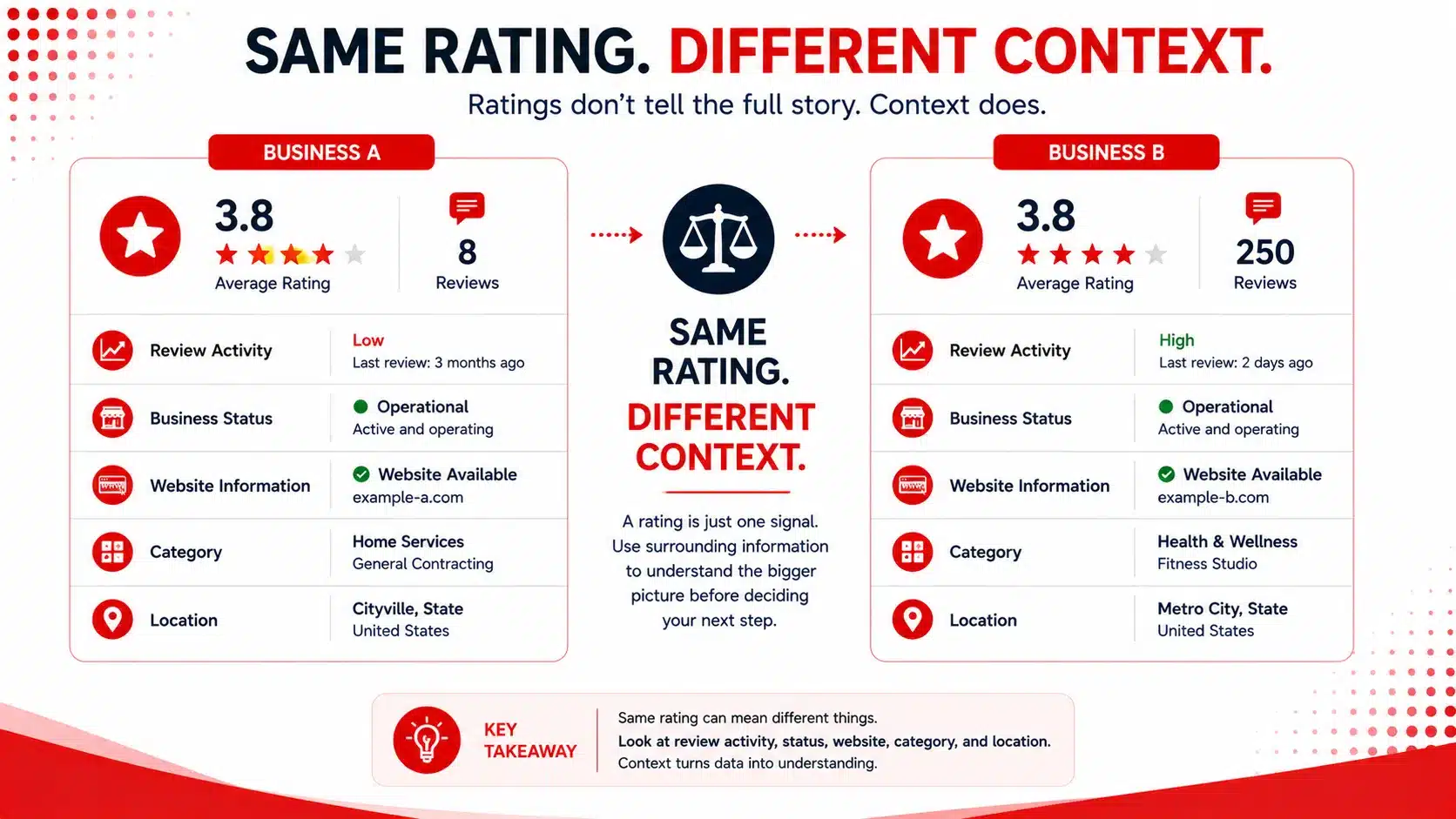
For example, a 3.8 rating from 200 reviews provides different research context from a 3.8 rating based on five reviews.
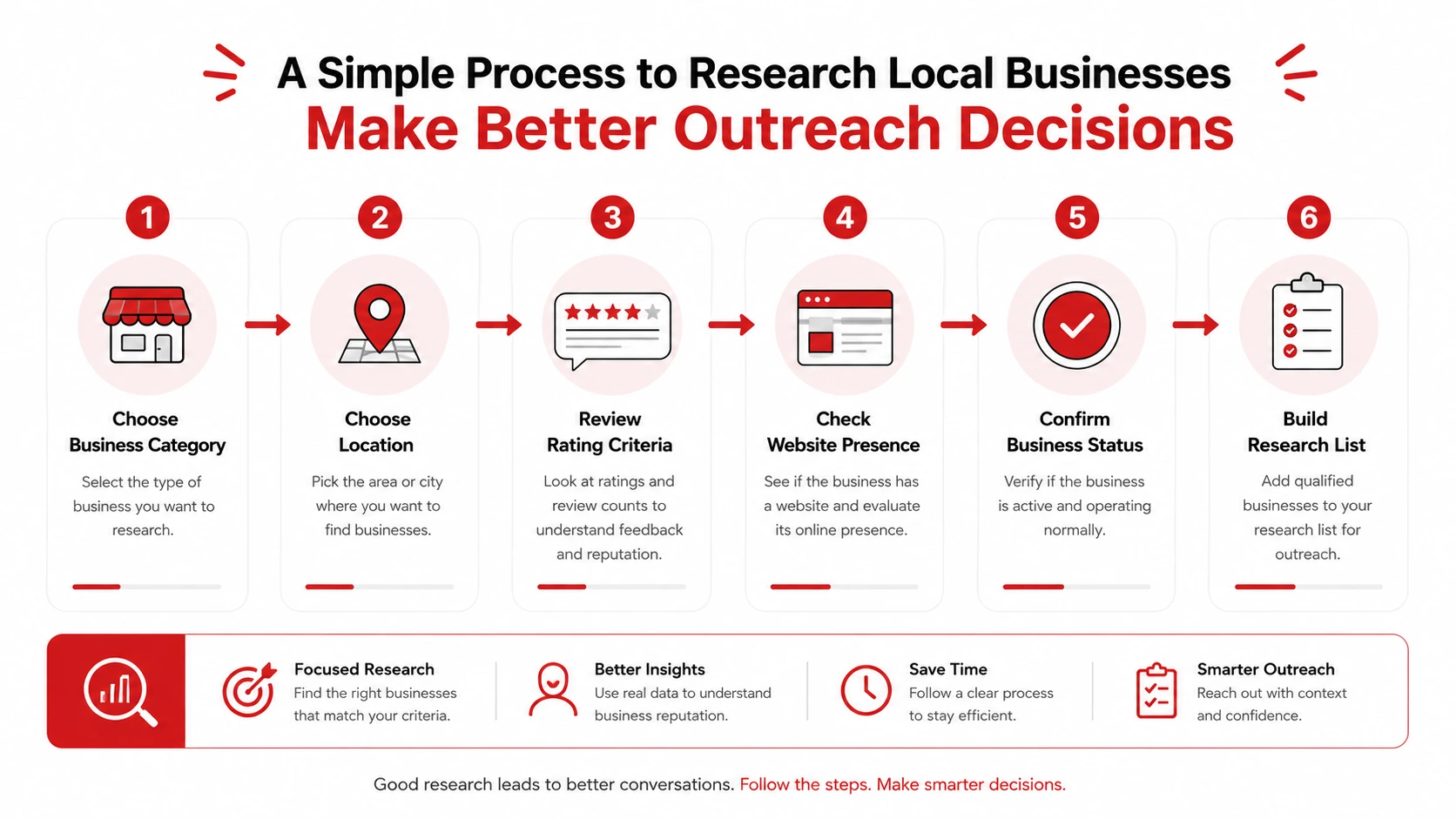
The objective is not to label a business as an SEO opportunity. It is to determine whether the record deserves additional research.
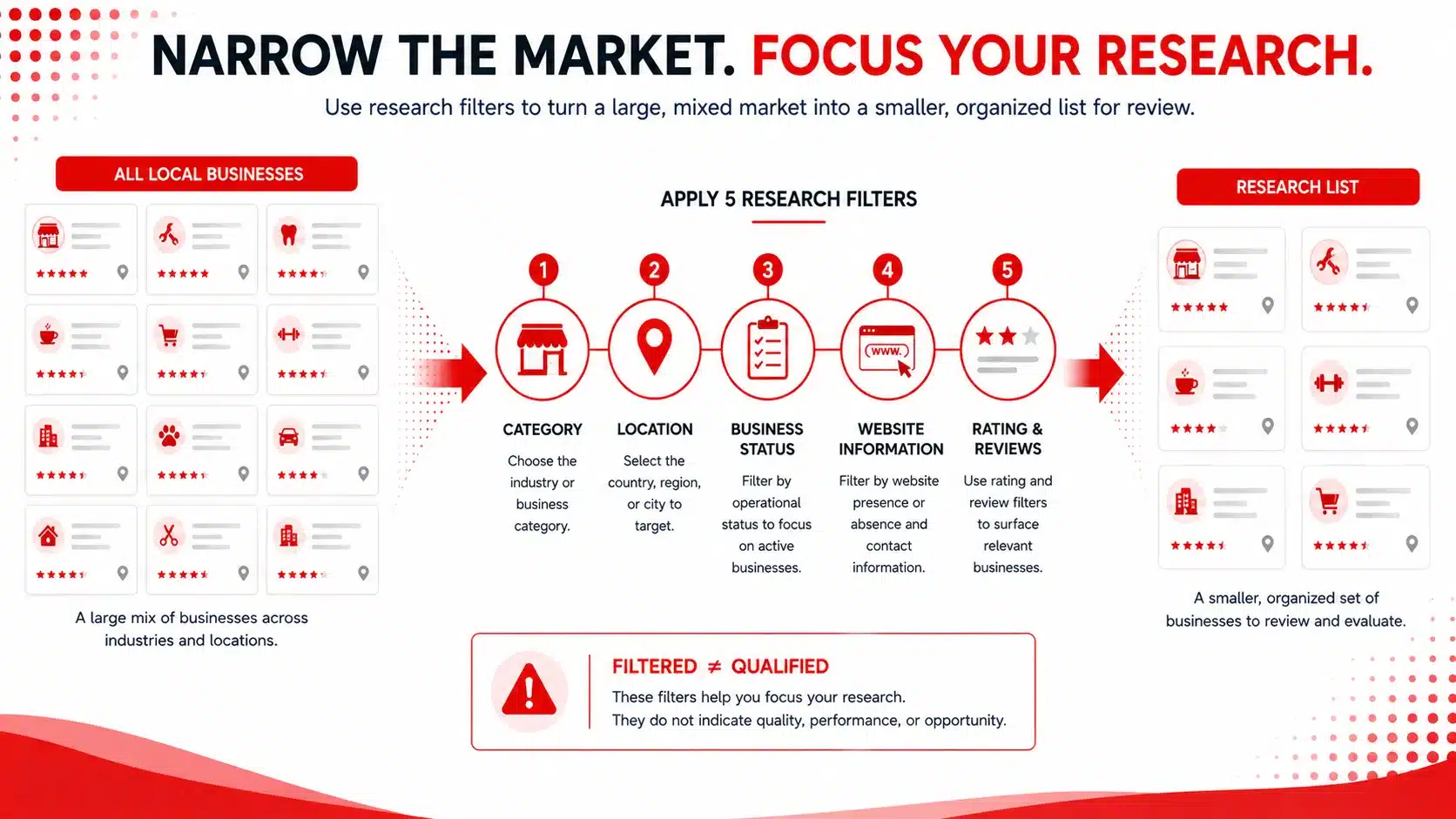
Before searching thousands of businesses, decide what your campaign actually needs to investigate.
A broad search for low-rated businesses can include unrelated industries, locations, and business situations.
Start with criteria such as:
An agency researching dentists in one city may use very different criteria from an agency researching restaurants across several locations.
These filters are research criteria—not proof of qualification.
If you need a more structured way to define the businesses you want to investigate, Targetron’s guide on finding B2B leads that match your ICP provides another framework for narrowing a broader market.
Keep the workflow simple:
Discover → Research → Verify → Qualify → Decide on Outreach
Targetron can support business discovery and research.
Your agency still decides whether the company fits your service and whether further research or outreach is appropriate.
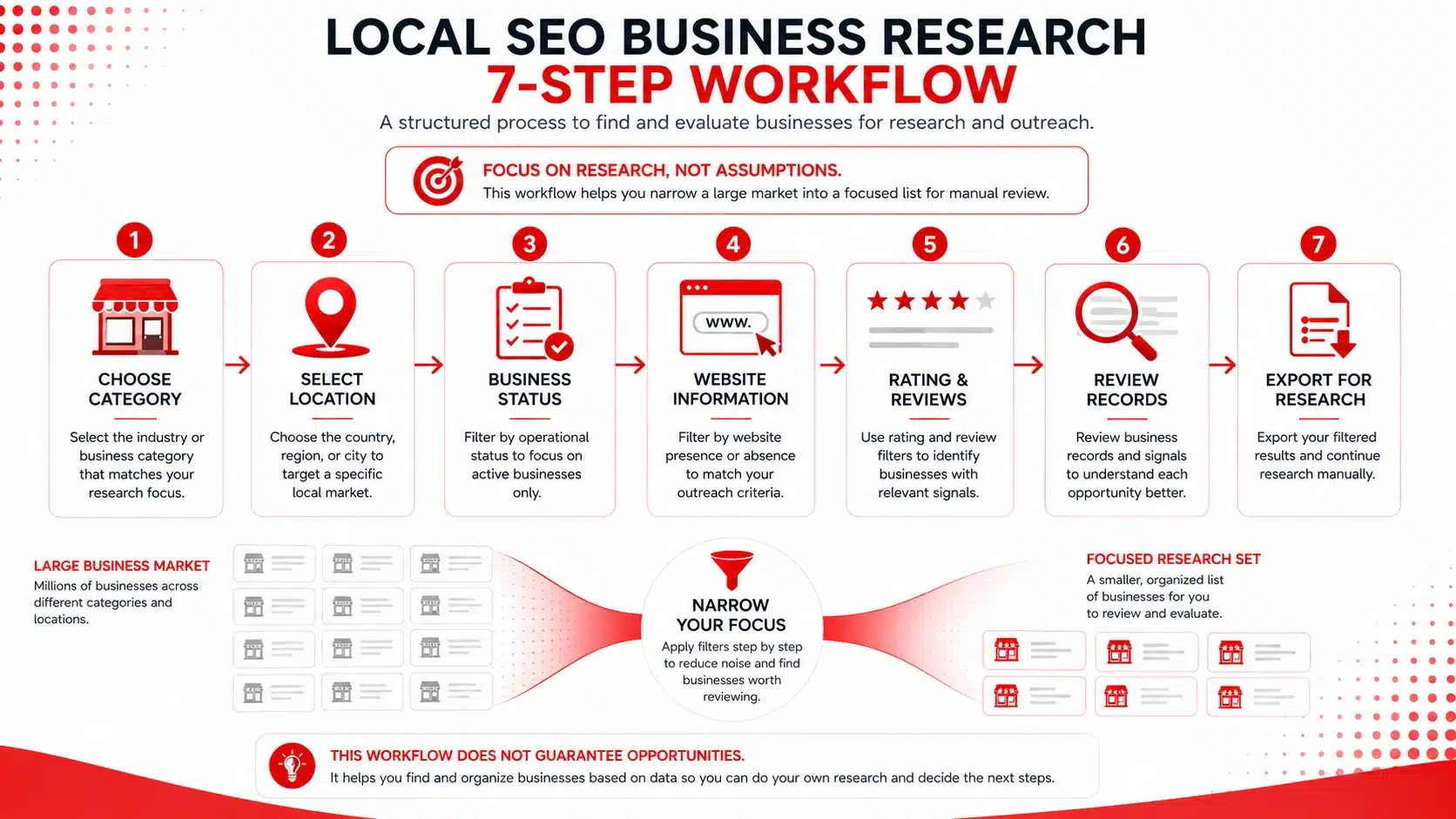
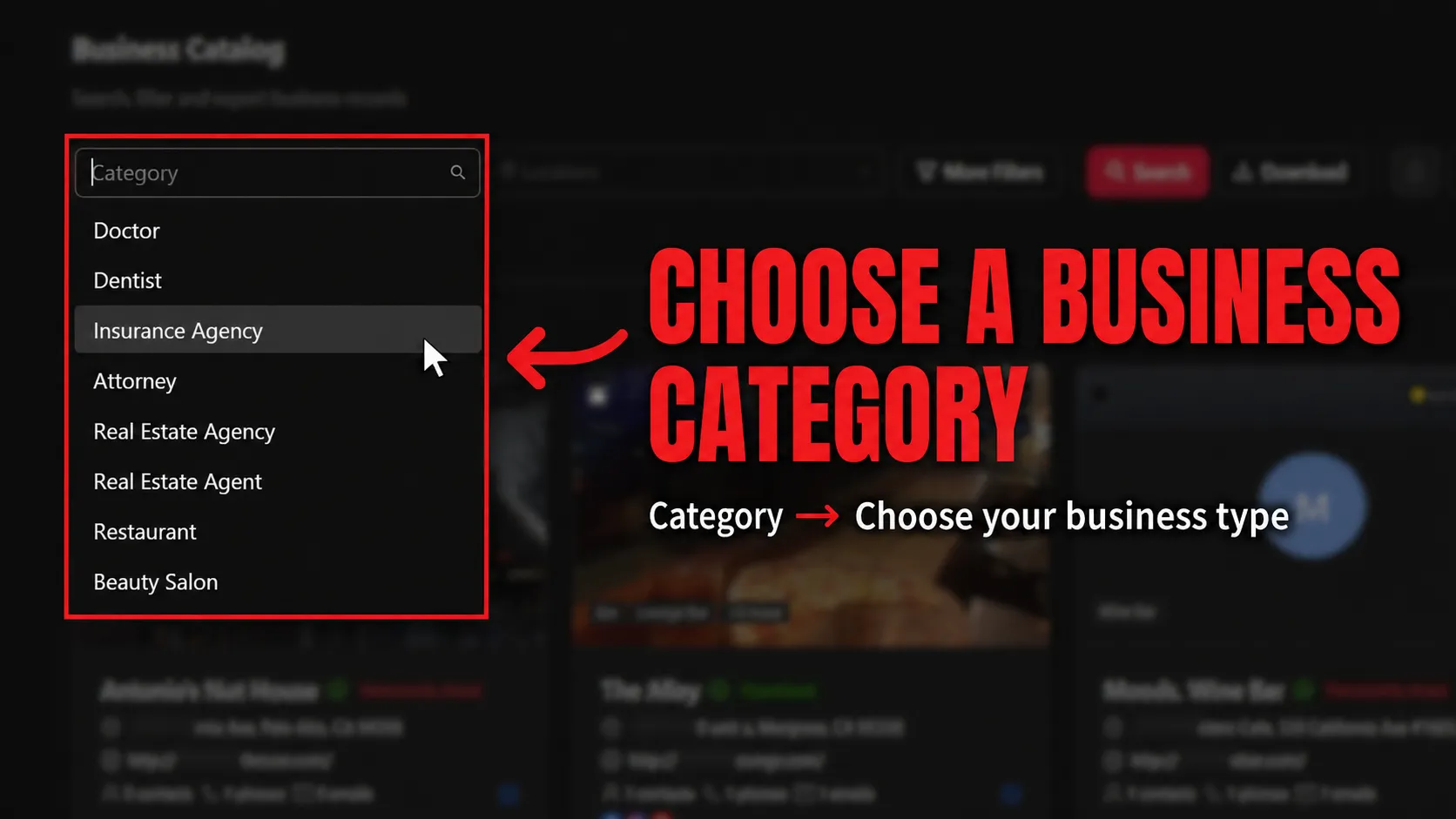
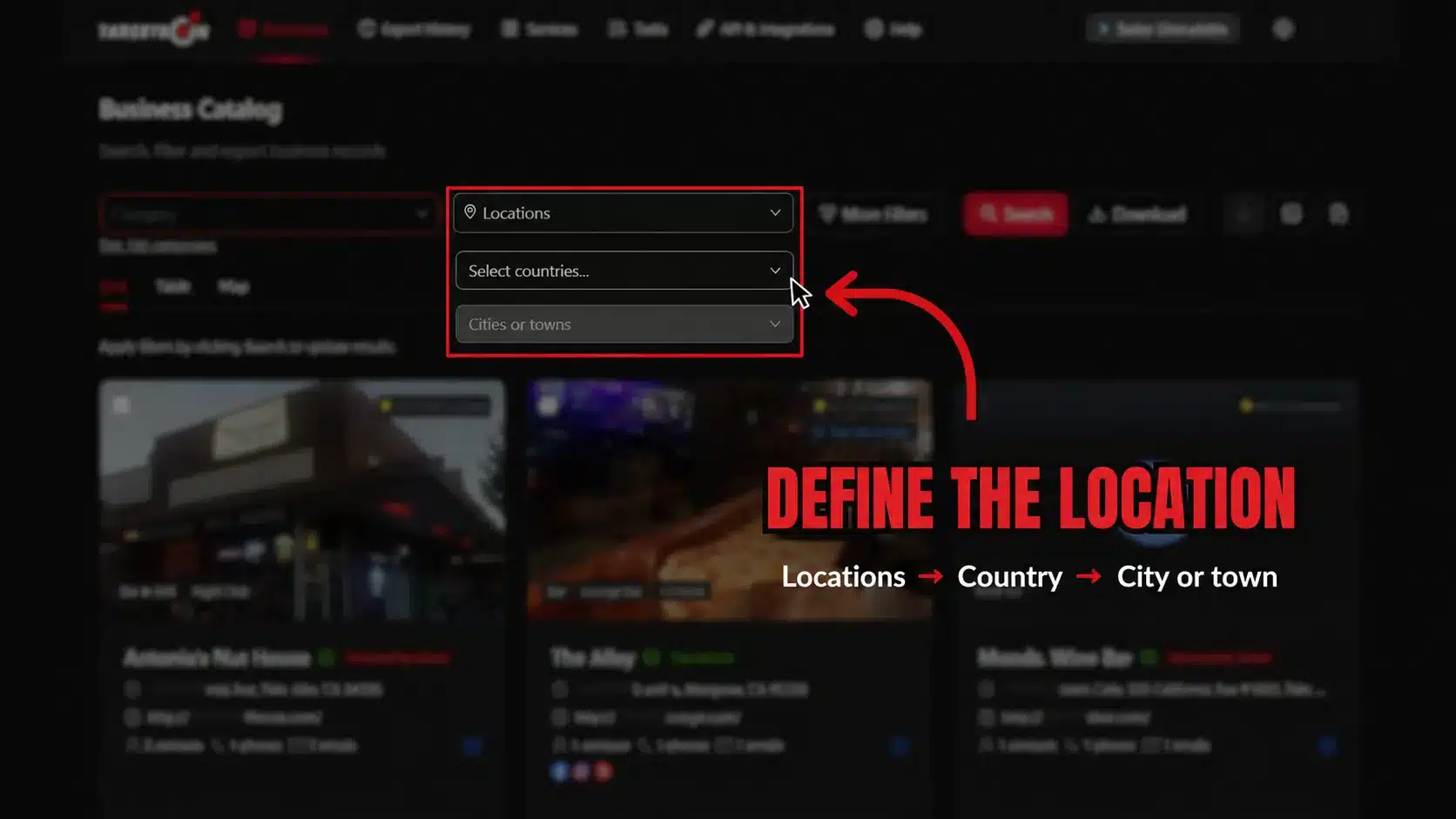
Once your criteria are defined, Targetron’s Business Catalog can be used to narrow the available records.
The workflow is:
Category → Location → Business Status → Website → Rating & Reviews → Search → Review → Export
This section should use real Targetron screenshots, not AI-generated recreations.
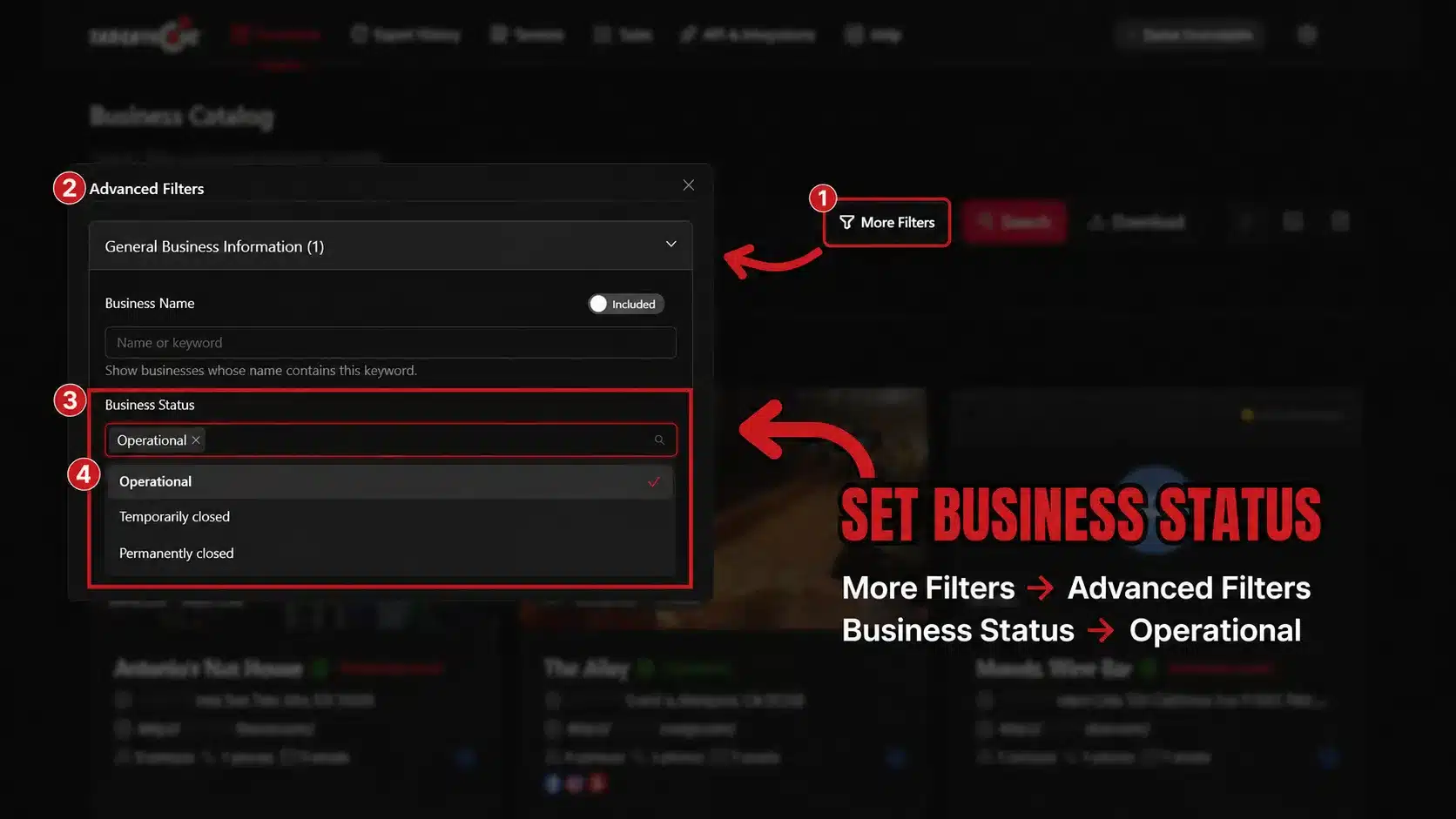
Open:
More Filters → Advanced Filters → General Business Information → Business Status
Selecting Operational can help remove businesses listed as temporarily or permanently closed.
Operational status does not mean the company needs SEO or is interested in services.
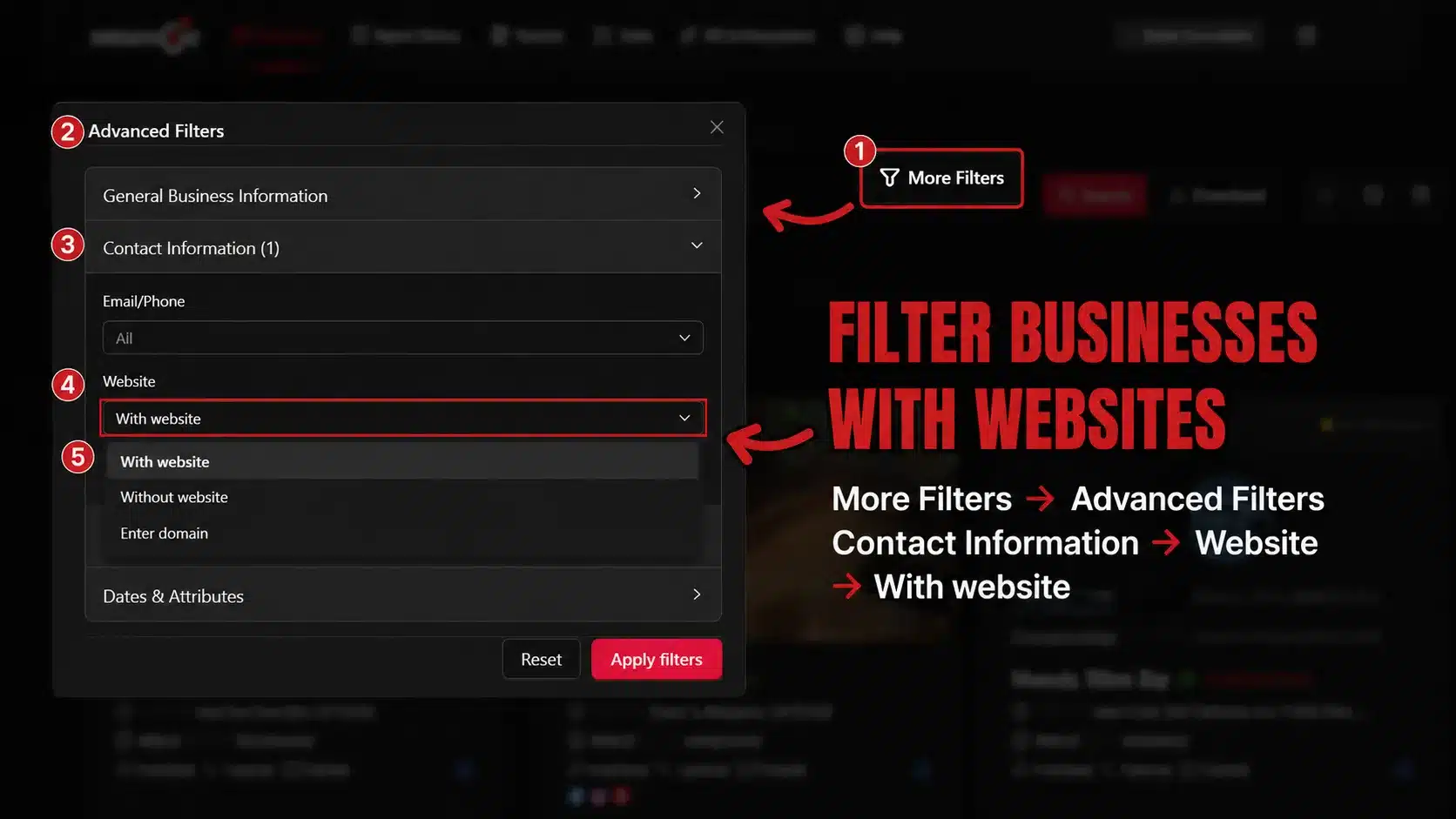
Open:
More Filters → Advanced Filters → Contact Information → Website
Use the Website option to narrow the results to records where website information is available.
This does not verify that the listed website is active, maintained, optimized, or suitable for an SEO campaign.
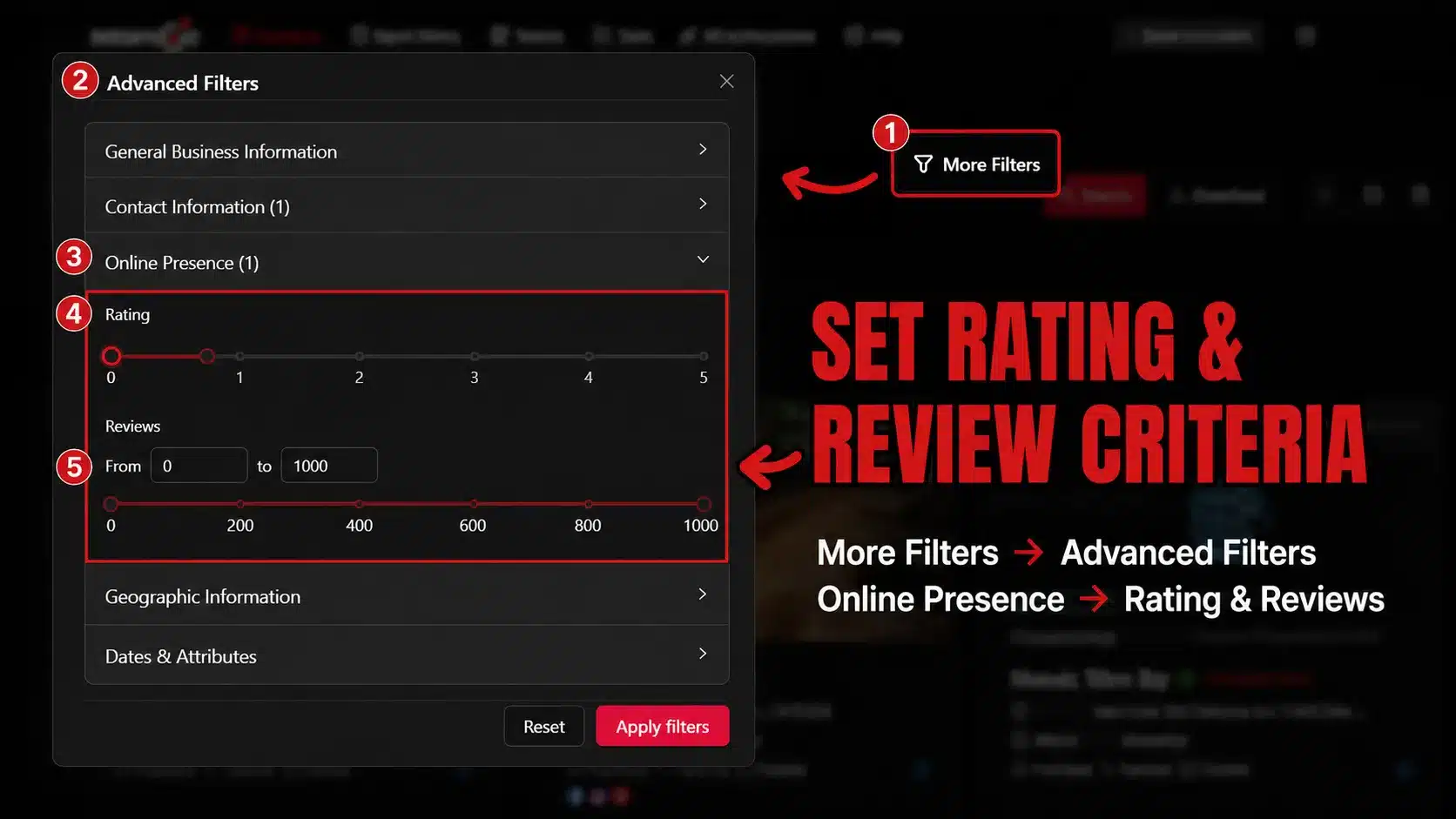
Open:
More Filters → Advanced Filters → Online Presence
Use the Rating and Reviews controls according to your research criteria.
Avoid treating a lower rating as evidence that SEO is the underlying problem.
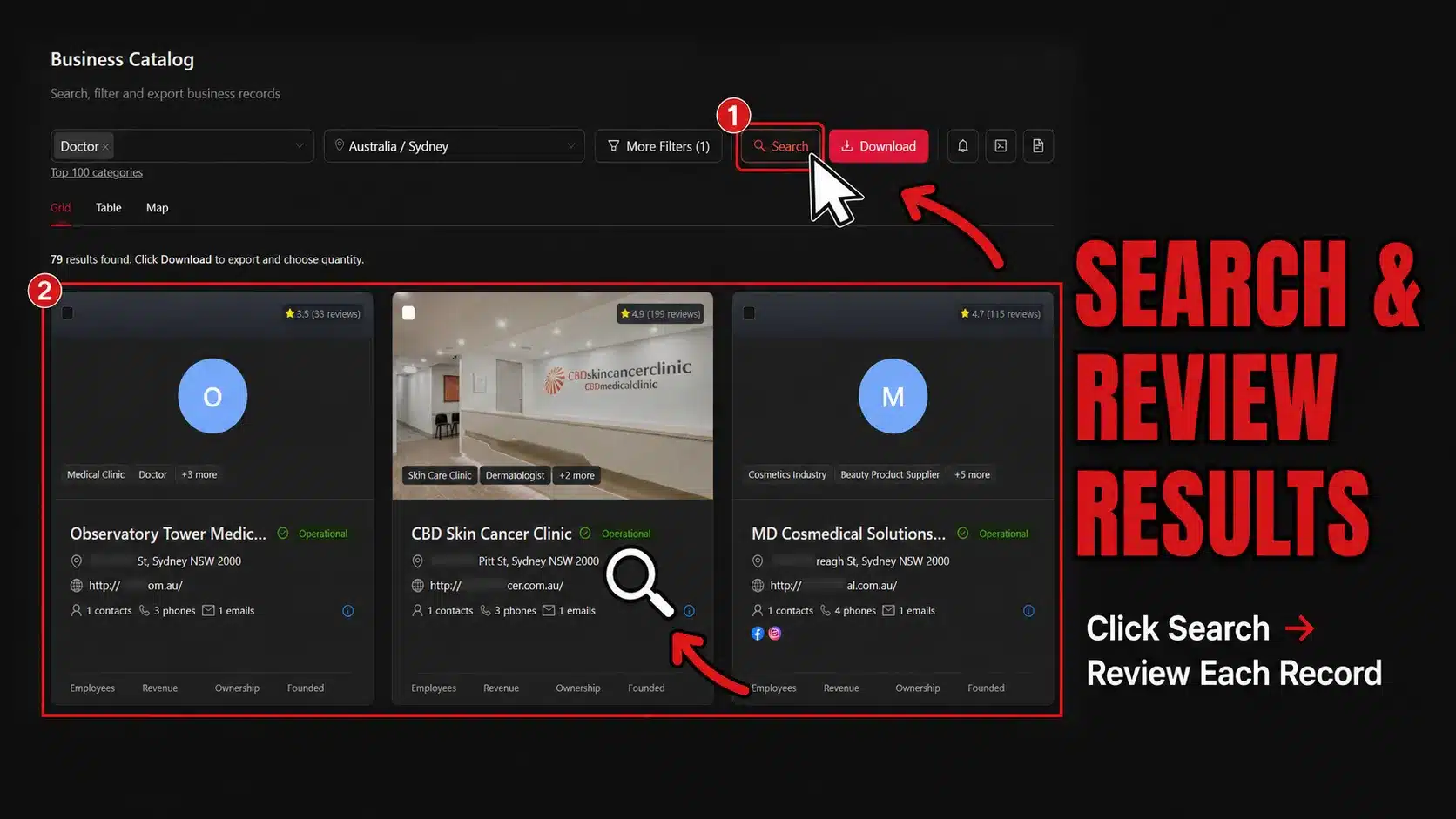
Click Search after applying your criteria.
Targetron will return business records matching the selected settings.
The returned records are research results, not automatically qualified SEO prospects.
Review each record against your own criteria before proceeding.
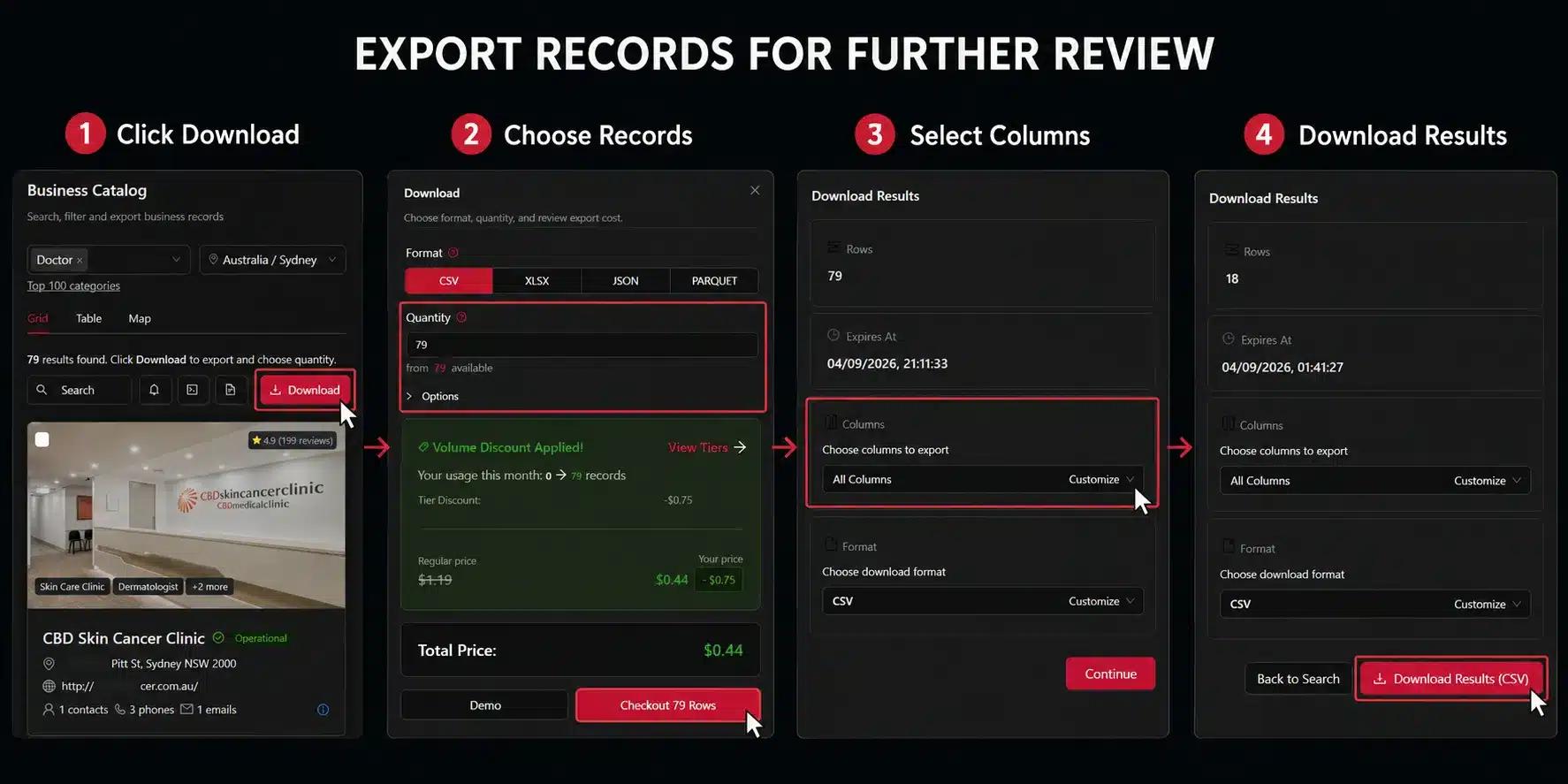
Click Download after reviewing the search results.
The export process can be presented as:
1. Click Download → 2. Choose Records → 3. Select Columns → 4. Download Results
Use Targetron to explore available business data based on criteria relevant to your campaign, then review the resulting records before deciding which businesses deserve further research.
Filtering makes research more manageable, but it cannot replace manual review.
Once a business record contains website information, open the listed website separately.
Start with a simple question:
Can you access the listed website?
If the website loads, review information relevant to your campaign.
Depending on the service, you might examine:
Google’s guidance on improving local ranking also highlights the importance of complete and accurate business information for local visibility.
However, Targetron does not determine whether those elements are optimized. That requires separate research.
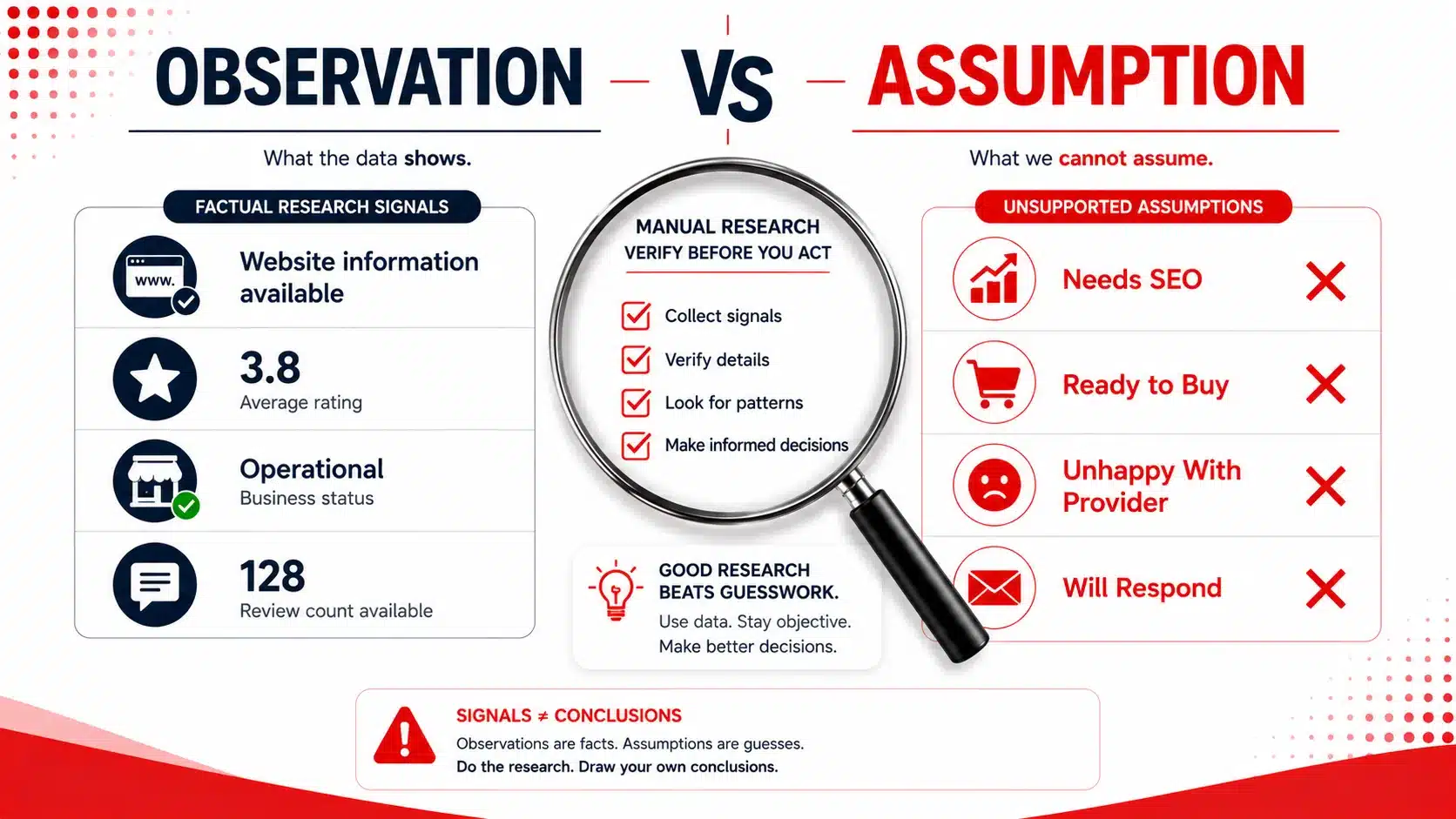
For example:
Observation:
Website information is available in the business record.
Unsupported assumption:
The website is actively maintained.
Or:
Observation:
The business has a lower average rating.
Unsupported assumption:
The business needs SEO.
Record what you can actually verify before drawing a conclusion.
If the business remains relevant after website research, the next stage may involve verifying available contact information. Targetron’s guide on how to verify B2B contact information provides a separate process for that stage.
Ratings become more useful when viewed alongside other available information.
Consider:
Business A — 3.8 stars from 8 reviews
Business B — 3.8 stars from 250 reviews
The average rating is the same, but the amount of customer feedback behind each rating is very different.
Consider:
A rating is one piece of research—not a complete qualification signal.
When appropriate, manually inspect recent customer feedback.
Lower ratings might relate to:
Many of those issues may have little or nothing to do with SEO.
A safer workflow is:
Filter → Review → Verify → Decide
Not:
Low Rating → Needs SEO
Use Targetron to narrow available records, then review websites, ratings, reviews, and other relevant information individually before making an outreach decision.
After filtering and exporting records, treat the file as a research starting point.
Do not assume every exported business should receive outreach.
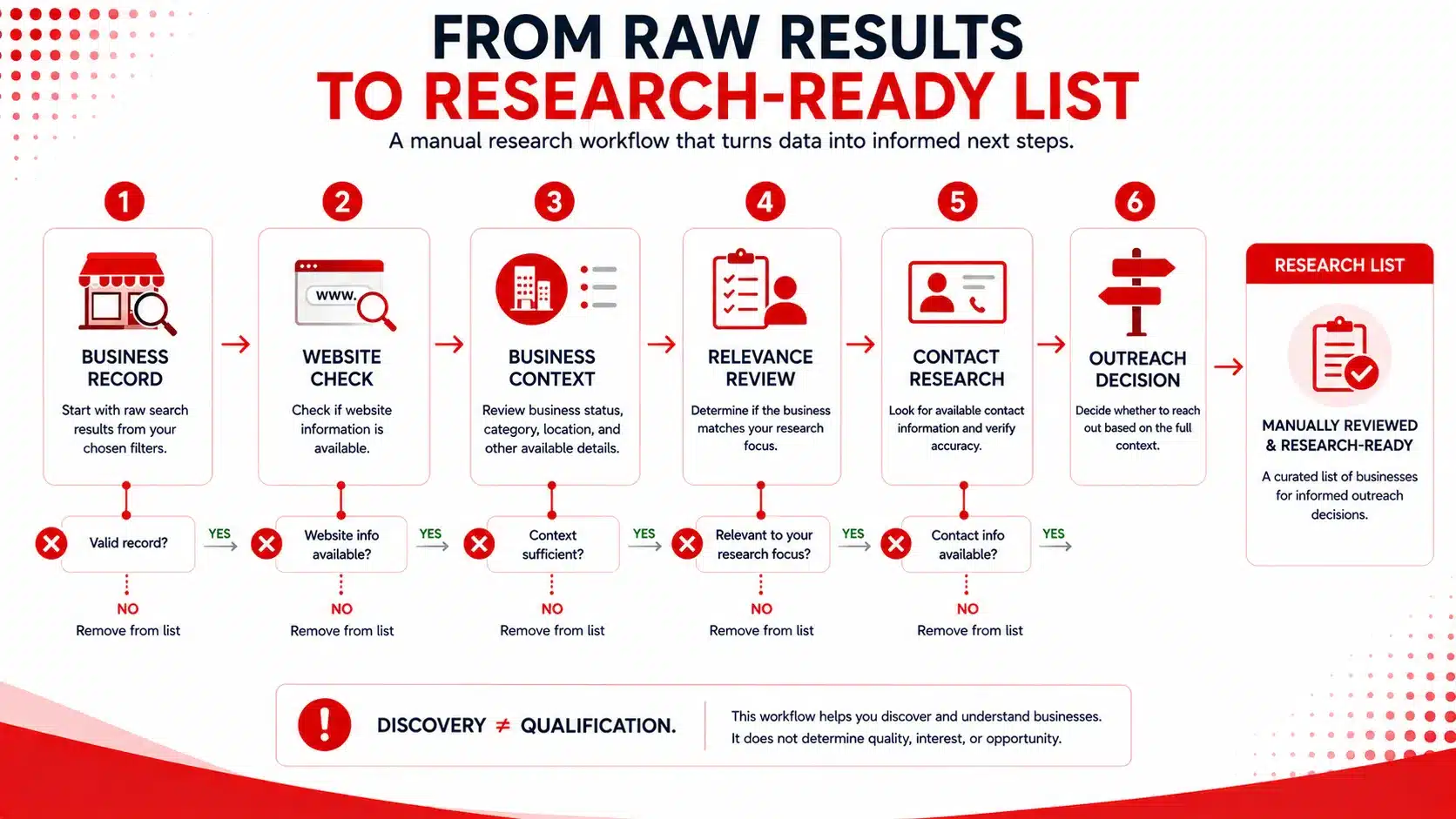
A practical workflow is:
Business Record → Website Check → Business Context → Relevance Review → Contact Research → Outreach Decision
A business may be removed from consideration at any stage.
This keeps discovery separate from qualification.
Instead of:
Needs SEO
Record:
Website information available; website reviewed on [date].
Instead of:
Bad reputation
Record:
Average rating of X from Y reviews at the time of research.
Factual notes make it easier to understand why a business was researched without claiming knowledge of its internal needs.
For campaigns that require additional information after initial discovery, Targetron’s B2B local business data resources provide additional context around available business information.
Use Targetron’s Business Catalog to narrow available records based on criteria relevant to your campaign, then review each business before deciding what comes next.
Most frequent questions and answers
No. Ratings can reflect many parts of the customer experience. A lower rating can help narrow research, but it does not prove that SEO is the problem. Use other business signals and manual review before deciding whether a company is relevant.
For a broader research framework, see lead scoring for small businesses.
Website information in a business record should not be treated as confirmation that the website is currently accessible or maintained. Open and review the listed website separately before using it as part of your research.
No. Operational status is a research filter. It does not establish service need, budget, buying intent, or interest in outreach.
You can learn more about separating business data from qualification in how to find B2B leads that match your ICP.
Review count adds context to an average rating. A 3.8 rating based on five reviews represents a different research situation from the same rating based on hundreds of reviews.
No. Treat the results as research records rather than automatically qualified prospects. Review the business, website information, and campaign relevance before deciding whether outreach makes sense.
If you move to contact research, use a separate B2B contact verification process before outreach.
Targetron can help agencies narrow available business records using category, location, business status, website information, ratings, reviews, and other available criteria. The agency still reviews the resulting records and decides which businesses deserve further investigation.