Arrange a Free Consultation.
Get Free Expert Advice
Don't wait for a call. Chat with our 5-decade experienced marketer via WhatsApp now!
A restaurant with complaints about dirty restrooms, sticky tables, and a three-star rating is not just receiving bad feedback. It may be showing signs of a cleaning contract opportunity.
An analysis of one-star reviews across the food service industry reveals a consistent pattern. While many restaurant owners focus on food quality, the complaints that damage trust often mention sticky menus, dirty restrooms, greasy floors, and dusty ceiling fans.
These complaints are not just negative feedback. They are public signs that a business may be losing customers because of visible hygiene issues.
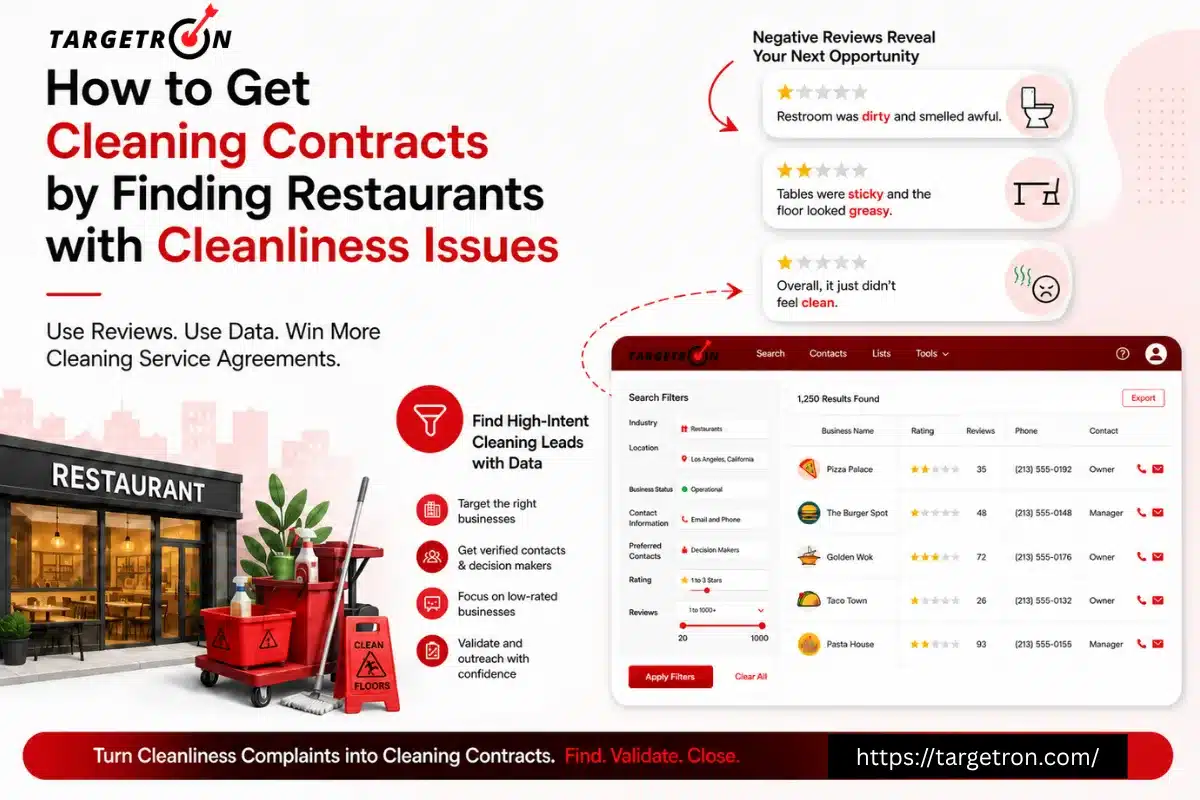
By using specific data filters, you can find these restaurants before other cleaning companies notice the opportunity. This guide shows you how to turn hygiene-related review signals into your next professional cleaning contract.
Do not rely on ratings alone. A low-rated restaurant may have complaints about food, pricing, or slow service. The real cleaning contract opportunity appears when low ratings are paired with repeated hygiene terms like dirty restrooms, sticky tables, greasy floors, bad odors, dusty vents, or unsanitary surfaces.
A restaurant with a high rating is a difficult sell for a cleaning contractor because it likely already has a rigorous system in place. However, a business with one- to three-star rating that specifically cites cleanliness is a different story.
According to BrightLocal’s 2026 Local Consumer Review Survey, 97% of consumers read reviews for local businesses. When a potential customer sees a negative cleanliness review, they do not just hesitate. They may choose a competing restaurant instead.
For the owner, that creates a high-stakes problem. You are not just selling a cleaning service. You are offering a way to improve their public reputation and bring customers back through the door.
To build a high-volume prospecting list without manual searching, you must move past basic search queries. You must use specific performance indicators to identify businesses in distress. Active review counts provide the necessary data points to separate high-intent leads from inactive profiles.
Focusing on these profiles connects you with owners who are currently facing a public relations crisis. You are walking into the conversation with a direct solution to the specific problem their customers are broadcasting online.
To turn a broad list of businesses into a high-intent lead sheet, you must refine your Targetron parameters. Generic searches produce generic results. To find the most profitable opportunities, use the following configuration:
Before adding a restaurant to your outreach list, confirm these signals:
By applying these specific constraints, you filter out businesses with low ratings caused by slow service, cold food, or pricing complaints. What remains is a cleaner prospect list where the visible problem is tied to facility maintenance, sanitation, or surface care. These are issues your cleaning service is qualified to fix.
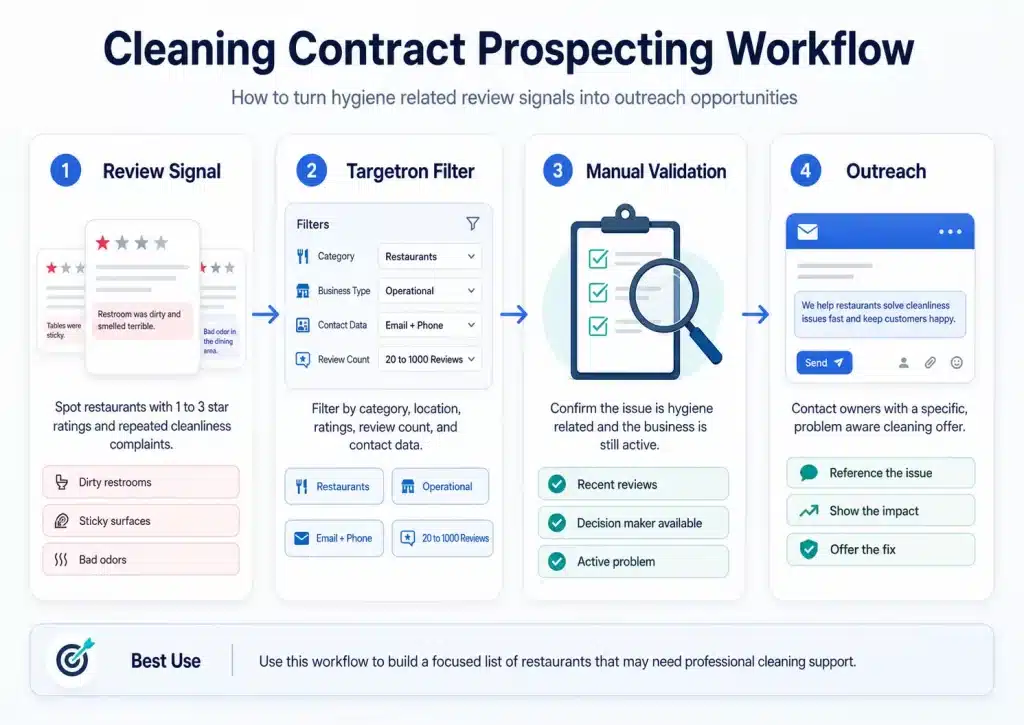
Your outreach should never feel like a cold sales pitch. Using a professional, data-backed approach ensures you stand out from the automated spam most owners receive. You are not asking for a favor. You are presenting a solution to a public problem that is currently damaging their bottom line.
When you contact a manager or owner, lead with the specific pain point identified in your manual validation step. This shows you have done your homework and are focused on their results.
“I was reviewing the recent feedback trends for your location and noticed a recurring theme regarding the condition of the restrooms and dining surfaces. With 97% of local diners checking reviews before they visit, these public comments are likely acting as a barrier to your weekend foot traffic. We specialize in sanitation and surface restoration that directly addresses these specific pain points so you can restore your 5-star reputation.”
The negative review strategy works for any industry where physical presentation impacts trust. You are looking for sectors where a clean environment is a legal or professional requirement..
If you want a broader approach beyond restaurants, read our guide on B2B cleaning services lead generation to see how Targetron can help you find commercial cleaning prospects across medical clinics, event venues, offices, and other business categories.
Most frequent questions and answers
Use Targetron to extract Google Maps data for businesses with a 1-star or 3-star average. Once you have the list, perform a manual validation on Google Maps to confirm the presence of hygiene-related keywords in their latest feedback.
Diners most frequently highlight issues with unsanitary restrooms, sticky tables or menus, and visible dust on ceiling fans, vents, and lighting fixtures.
Yes. You are identifying a legitimate operational failure that is actively harming a business. Offering a professional solution helps the owner improve their reputation and provides a better experience for the public.
Corporate healthcare clinics, veterinary offices, and high-traffic retail stores are excellent secondary targets. These sectors have high sanitation standards and are equally vulnerable to negative public feedback.
Start by selecting your target industry and location. Apply the advanced filters for Business Status (Operational) and Contact Information (Email/Phone). Set the review count filter between 20 and 1000 to ensure the business is established but still manageable for a specialized service provider.
