Arrange a Free Consultation.
Get Free Expert Advoce
Don't wait for a call. Chat with our sales team now via WhatsApp!
A B2B sales leads database is a searchable business contact directory of professional contact information. It works like a search engine for business data. Instead of hunting for prospects on social media, you use filters to find them by job title or industry.
Recent findings from the Salesforce State of Sales 2026 report show that even with the rise of AI, sales teams still spend nearly one full day of their workweek just on prospecting. Using a database replaces that manual research with a list of verified emails and direct phone numbers. For teams looking to accelerate this process, you can even use an AI assistant for faster B2B lead generation to build lists in seconds.
Why Data Quality Matters
The value of a database depends on how often the records are updated. People change jobs, and companies move. If the data is old, your emails will bounce, and you will waste time calling dead ends. Salesforce highlights that high performers are much more likely to prioritize data hygiene to avoid these bottlenecks. A good database should show you the company size and the specific tools they use.
How to Choose the Right Database for Your Team
Look at the filtering options first. You need to know if you can narrow your search by industry, location, business status, or revenue. Also, check if the data syncs with your CRM. Many providers offer a free trial or preview of the database. Use it to check accuracy before you buy a plan or add credits to your account.
A professional database goes beyond a simple list of names. It provides the technical and behavioral data points needed to personalize your outreach.
Basic data is the foundation of your list. This includes the legal name of the business, its official website, and its physical headquarters. While this seems simple, having a verified physical location helps you filter leads by specific regions or time zones.
You can even create a business radius maps to visualize every prospect and competitor within a set distance from your office. It also ensures you are contacting the right entity if a company has multiple branches.
The most valuable part of any B2B sales leads database is the verified contact information. This includes direct work emails and phone numbers for specific roles. High-quality databases also use precise business categories. Instead of a broad “Retail” tag, you get specific labels like “Boutique Fitness Studio” or “E-commerce Pet Supply.” This allows you to speak the language of the prospect.
Modern data providers track “signals” that show a business is in a transition phase. Look at recent ratings, new business registrations, or even notices of recent closures. For example, finding newly registered businesses often means a company needs new software or insurance. Conversely, a sudden drop in ratings might signal a need for reputation management services. You can use these triggers to time your outreach perfectly.
To get the most out of your data, you should understand the four main types of B2B customers. Once you know these, it becomes easier to build your ideal customer profile (ICP) using local signals.
Buying a B2B sales leads database is just the first step. The real growth happens when you apply that data to specific sales and marketing workflows.
Most companies use these databases to improve cold outreach. Instead of waiting for leads to find you, you go to them. For example, if you sell software to construction firms, you can pull a list of every local contractor in a specific city.
This allows your sales team to stop searching and start calling. Because the data includes specific locations, you can also plan physical sales routes or local events with high precision.
You cannot grow if you do not know the size of your playground. Market mapping is the process of using a database to identify your total addressable market (TAM). It tells you exactly how many potential customers exist in your niche.
Also, businesses use these tools for data enrichment. If you have an old list of names but no phone numbers, you can upload that list to a database to fill in the gaps with fresh, verified information.
Data helps you refine the 7Ps of your marketing plan. When you have deep insights into your leads, you can adjust your approach for better results.
Choosing how to source your B2B leads often comes down to balancing speed, cost, and accuracy. You can read more about the difference between a lead directory and web scraping to see which fits your budget. While each method has its place, the gap between them is growing as market data becomes more volatile.
The Efficiency Gap
Manual prospecting is the most accurate but also the slowest. A dedicated researcher might find and verify 30 to 50 leads per day, which simply cannot fuel a high-growth sales team. At that rate, building a significant pipeline takes months. On the other hand, pure scraping tools can pull thousands of records in minutes, but the data is often “dirty.” Scraped lists frequently include generic “info@” emails, outdated job titles, and unverified phone numbers that lead to high bounce rates.
The Database Advantage
A professional B2B lead database offers the best of both worlds. It provides the massive scale of a scraper with the reliability of a verified source. High-quality databases use real-time verification to check mailbox behavior before you even export the data. This means you get thousands of leads in minutes, yet your bounce rate stays low. Most established platforms also refresh their data every 30 days to keep up with the 25% annual job turnover rate in the B2B world.
Red Flags to Watch For:
Not all data providers are equal. Keep an eye out for these warning signs when choosing a partner:
A lead database is no longer a static directory; it must function as a live data stream. When looking for B2B prospecting tools in 2026, freshness is the most important factor. The value of your data depends on its ability to bypass the “grunt work” of manual verification and move straight into outreach.
Freshness and Coverage
Data quality drops fast. In the B2B world, roughly 2% of contact data becomes inaccurate every month. For the data to stay useful, you need a system built for real-time lead generation. This keeps your bounce rates low and protects your email reputation. Look for deep coverage in niche industries like local manufacturing or specialized services, not just broad tech lists.
Filtering and Granularity
The best tools allow you to narrow your search to specific, local leads. Instead of pulling a list of all “contractors,” you should be able to filter by city, revenue, or the specific software they use. High-performing teams are much more likely to use these granular filters to avoid sending messages to people who aren’t a fit.
Compliance and Safety
Data must be gathered legally to protect your business. In 2026, using non-compliant data is a quick way to get your domain blacklisted. Professional databases use public records and official registries. They also filter out “spam traps” that can ruin your ability to reach any inbox.
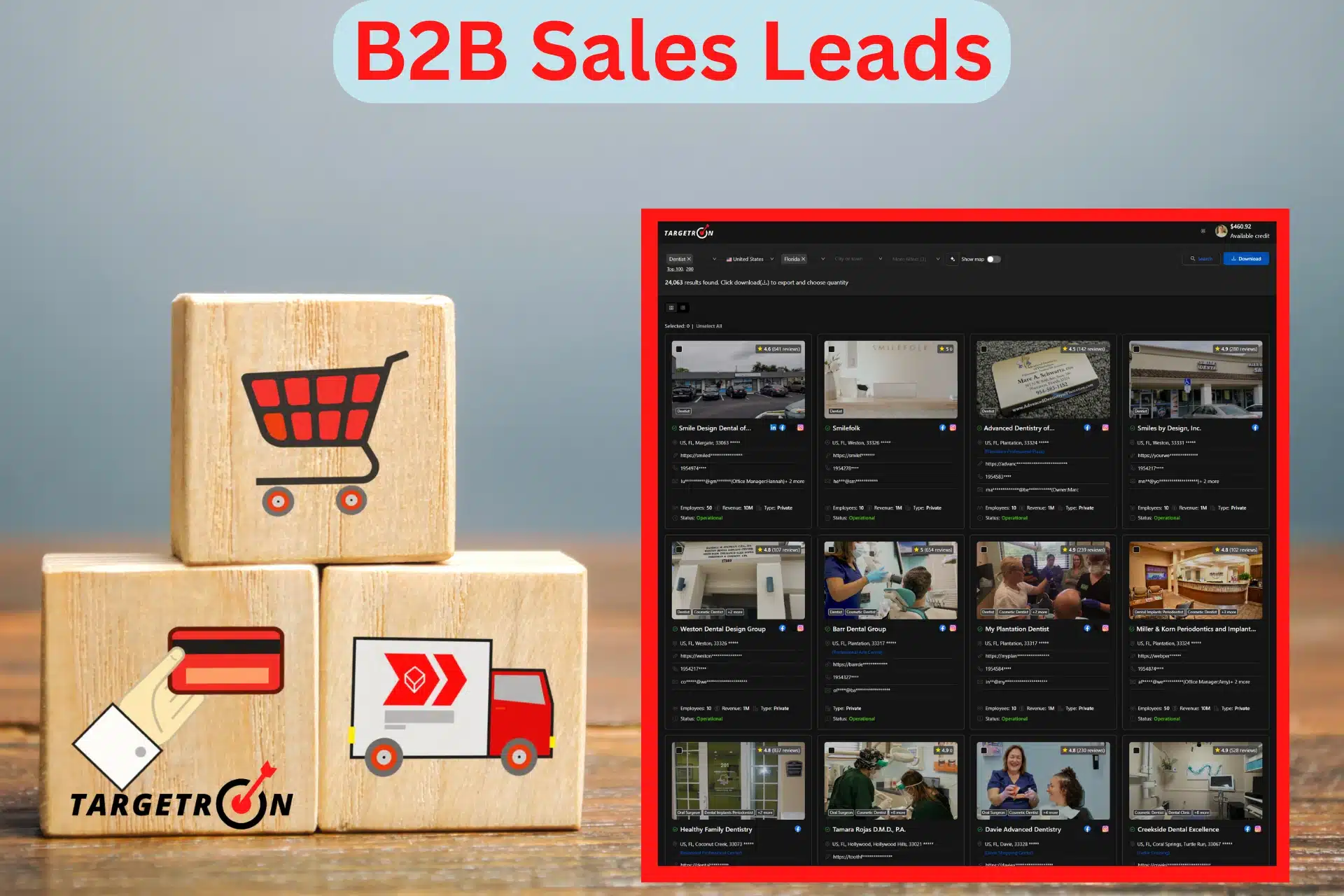
Targetron bridges the gap between raw web scraping and static databases by providing an active, curated directory. Instead of writing code or buying a “frozen” list that is months old, you access a live environment designed for immediate outreach.
The Targetron Edge
Most founders face a difficult choice: either spend days configuring scrapers to handle dynamic JavaScript or pay thousands for enterprise databases. Targetron removes this problem. It acts as a pre-scraped, verified directory where technical problems, such as handling proxy rotations and anti-bot measures, have already been addressed. You get the depth of a custom scrape with the speed of a search engine.
Local Accuracy
For agencies and local businesses, “big tech” databases often lack the granular detail needed for city-specific campaigns. Targetron excels at Google Maps lead generation by pulling deep insights from local profiles. You can access verified physical locations and service areas. Also, you can filter leads by their rating and review volume to target businesses with a proven market reputation.
Simple Exporting and API Access
Data is only useful if your team can act on it. Targetron eliminates the technical headache of reformatting messy spreadsheets. Once you have filtered your list, you can export it as a clean CSV, XLSX, or JSON file.
For teams that want to automate their workflow even further, Targetron offers a powerful API. This allows developers to integrate lead data directly into internal tools or custom applications. You can pull fresh data programmatically, ensuring your sales stack always has the most recent information without manual exports.
Cost-Effectiveness
Targetron provides an affordable B2B lead database for founders who don’t want enterprise prices. While legacy platforms often require long-term contracts and high annual fees, Targetron uses a flexible model. You pay for the data you actually need. This makes it easier to maintain a positive ROI for every campaign, whether you are a solo founder or a growing agency.
Most frequent questions and answers
A B2B sales leads database is a searchable digital directory of business contact information. It works like a specialized search engine for professional data, allowing you to filter by job title, industry, or location
Yes, Targetron pulls and verifies insights from live sources like Google Maps to ensure the data is as fresh as possible.
A web scraper pulls raw, unverified data from the internet in real time, which often requires technical skills to clean. A lead database like Targetron provides a structured, pre-verified directory. It gives you the speed of a scraper with the reliability of a cleaned data source.
You can export data in clean formats like CSV or JSON that are ready for import into any CRM, or use the API for direct integration.
Many databases focus only on “Big Tech,” but platforms like Targetron specialize in local accuracy. You can pull deep insights from Google Maps to find specific businesses like contractors or retail shops in a particular city.
No, the platform is designed for non-technical users to find and export leads easily, though an API is available for those who want to use it.
