Arrange a Free Consultation.
Get Free Expert Advice
Don't wait for a call. Chat with our 5-decade experienced marketer via WhatsApp now!
Learning how to find B2B leads in niche industries starts with one simple shift: stop chasing bigger lists and start building better-fit lists. In smaller markets like dental clinics, commercial cleaning companies, medical spas, local manufacturers, or specialty contractors, every weak-fit lead matters. A broad list may look useful at first, but it quickly becomes harder to use if the businesses are in the wrong category, lack contact details, or show no clear reason for outreach.
This matters because B2B buyers are doing more research before speaking with sales. Gartner reported in 2026 that 67% of B2B buyers prefer a rep-free sales experience, while 6sense’s 2025 B2B Buyer Experience Report found that winning vendors are already on the buyer’s Day One shortlist 95% of the time.
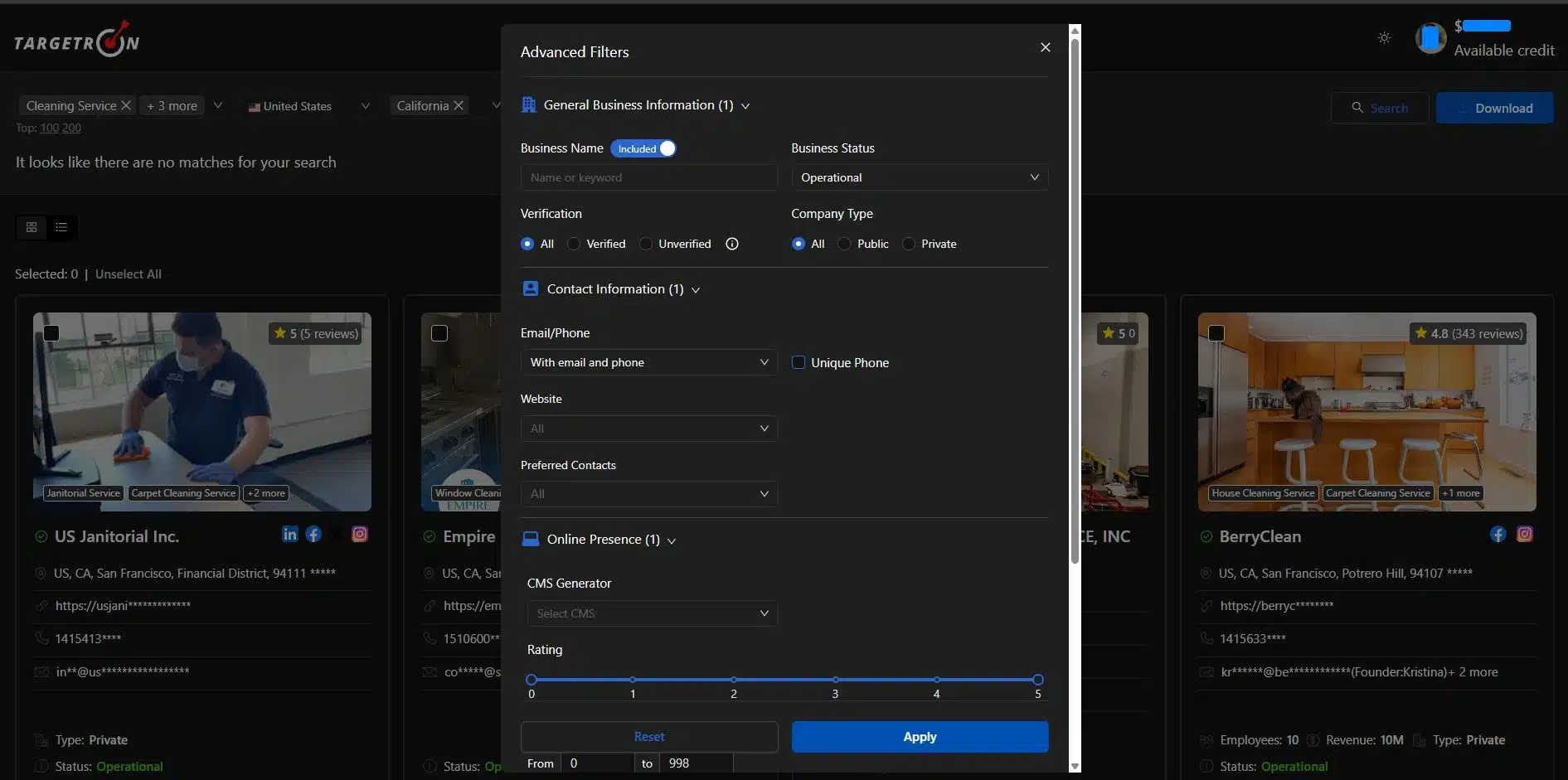
For niche industries, this means random outreach is easier to ignore. The better approach is to qualify businesses before outreach using category, location, website presence, contact availability, ratings, reviews, and business status.
That is where category-based prospecting helps. Instead of collecting a broad list and cleaning it later, you start with a specific niche, narrow it by location, check business signals, and export only the leads that match your offer.
With Targetron, sales teams, agencies, founders, and business development teams can search by business category and location, apply filters, review contact paths, and build cleaner niche B2B lead lists for outreach.
For a broader approach to using public business data for prospecting, see Targetron’s guide on how to find B2B leads without buying expensive lists.
Quick Answer: How to Find B2B Leads in Niche Industries
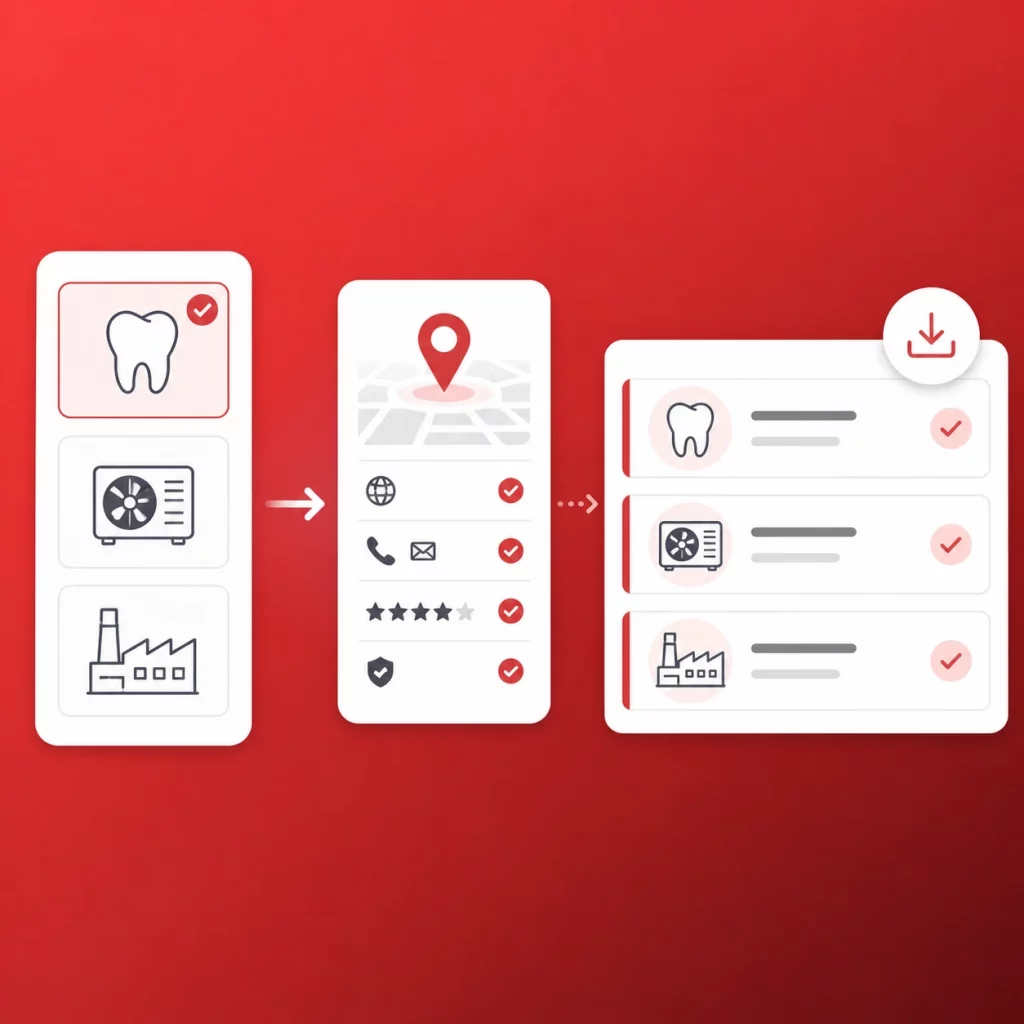
Targetron helps you search businesses by category and location, check business signals, and export a focused list before outreach.
Finding leads in a broad market is usually a volume problem. Finding leads in a niche industry is a precision problem.
When your target market is smaller, every weak-fit record matters. A broad lead list may include companies that look relevant at first but do not match your offer, location, service area, or ideal customer profile. This creates more work for sales teams, agencies, founders, and business development teams because the list still needs to be cleaned, checked, and qualified before outreach.
For example, “healthcare businesses” is too broad. A better niche target would be dental clinics, medical spas, physical therapy practices, or senior care providers in a specific location. The same applies to commercial cleaning companies, local manufacturers, logistics providers, industrial suppliers, and specialty contractors. These businesses may belong to similar markets, but their needs, contact paths, and buying signals can be very different.
In niche industries, broad targeting creates weak lists fast. If the category is too general, the list may include wrong-fit businesses. If the location is too wide, your team may review companies outside your service area. If the filters are too loose, the list may include inactive businesses, missing websites, poor contact paths, or outdated records.
A smaller list with a stronger fit is usually more useful than a large list with weak context.
Basic lead lists usually show company names, industries, locations, and contacts. For niche prospecting, that is not enough.
You also need to know if the business is active, in the right category, reachable by phone or email, and showing useful signals such as website presence, ratings, reviews, or business status. These details help you understand not only who to contact, but why they may be worth contacting.
Niche B2B prospecting should not start with “How many leads can we collect?” It should start with “Which companies actually match our offer?”
The better approach is to qualify before outreach: choose a specific category, narrow by location, check business signals, remove weak-fit records, and keep only the companies that are relevant enough to contact.
This is the foundation of category-based prospecting.
The first step in finding B2B leads in a niche industry is choosing the right business category. If the category is too broad, the list becomes harder to qualify before outreach.
For example, “healthcare businesses” may include clinics, hospitals, pharmacies, wellness centers, dental practices, and medical suppliers. A sharper category like “dental clinics,” “medical spas,” or “physical therapy practices” gives your team a clearer starting point.
Category-based prospecting helps you build a list around businesses that are more likely to match your offer. Instead of collecting a large mixed list, you start with a focused niche, then narrow it by location, contact availability, and business signals.
A B2B local leads directory can help teams start with category and location first, instead of sorting through a broad company database later.
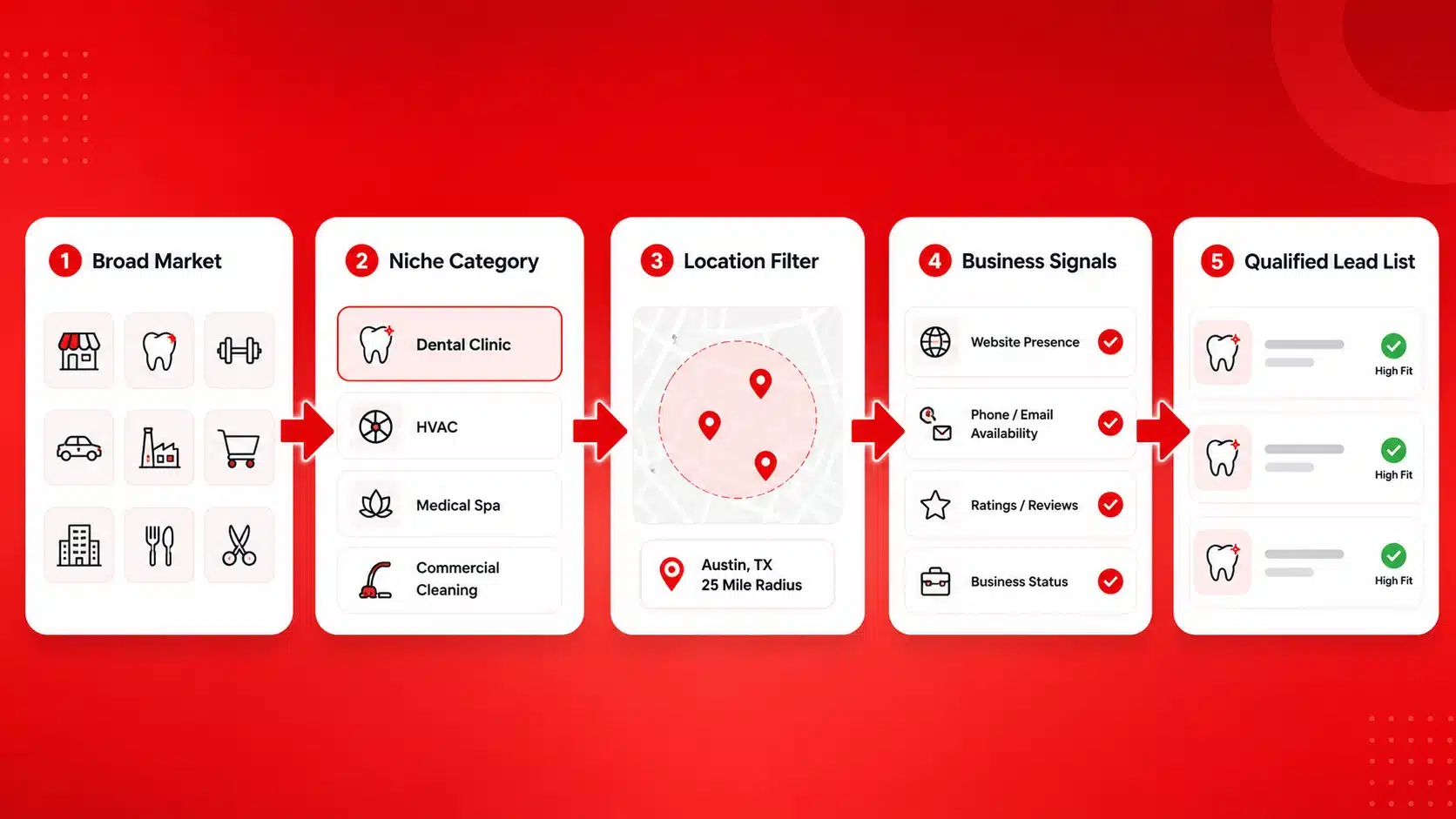
A niche category should be specific enough to match your offer.
For example, a web design agency may target local businesses with no website. A reputation management service may target businesses with many reviews but low ratings. A marketing agency may target service businesses with demand but weak online visibility.
Useful niche categories can include dental clinics, commercial cleaning companies, HVAC contractors, medical spas, local manufacturers, accounting firms, industrial suppliers, logistics providers, and specialty contractors.
After choosing the category, narrow the search by city, state, region, or service area.
“Commercial cleaning companies” is still broad. “Commercial cleaning companies in Dallas” is more actionable. “Commercial cleaning companies in Dallas with a website, phone number, and 20+ reviews” is even stronger.
Location keeps the list focused on markets your team can realistically serve.
Some niche categories may be too small in one location. If the list is too limited, expand carefully by adding nearby cities, testing related categories, targeting a larger region, or adjusting filters such as review count or website status.
The goal is not to make the list broad again. The goal is to keep the niche focused while building enough qualified leads for outreach.
Before exporting a list, define what a good-fit business looks like. A simple niche ICP can include business category, location, website status, phone or email availability, review count, rating range, business status, and a clear outreach reason.
This helps prevent weak records from entering your final list. You are not just collecting names. You are identifying businesses that match your offer, operate in the right market, and show signals that make them worth contacting.
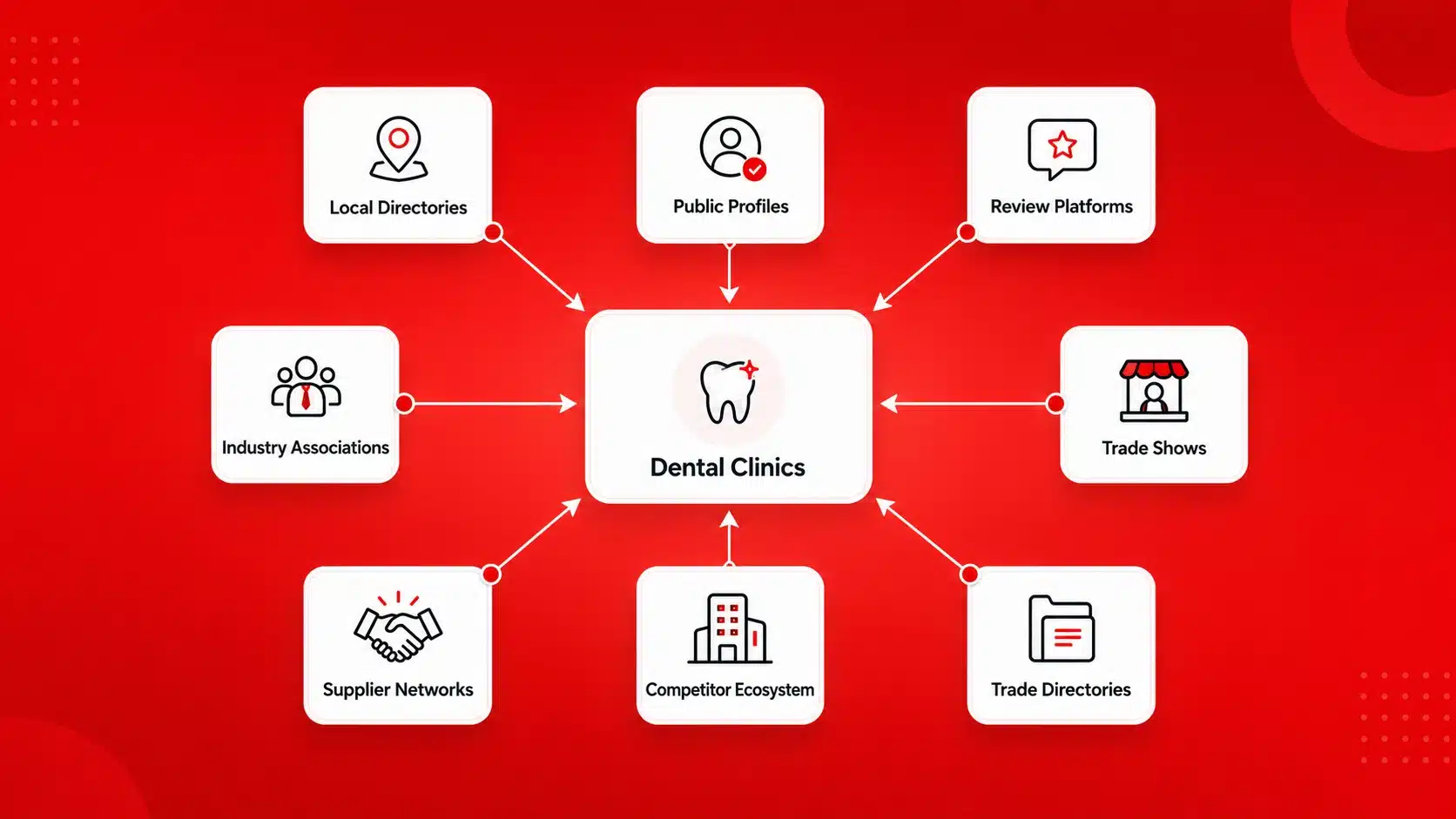
Once you define the right category and location, the next step is knowing where to look. Niche B2B leads may not always appear clearly in broad databases, so it helps to use multiple sources and qualify each business by fit, activity, and contact availability.
Local business directories and category-based databases are strong starting points because they let you search by business type and location.
Instead of searching for “businesses in Los Angeles,” you can search for “commercial cleaning companies in San Francisco” or “dental clinics in Dallas.” The best sources show category, location, website, phone number, ratings, reviews, and business status in one place.
Public business profiles can show whether a company is active, visible, and worth contacting. Ratings and reviews can reveal demand, customer complaints, reputation gaps, or strong local competition.
For example, a business with many reviews but a low rating may be a fit for reputation management. A business with many reviews but a weak website may be a fit for local SEO, web design, or ads.
Associations, certification bodies, and trade directories can help you find companies in specialized or regulated industries.
Examples include contractor associations, healthcare provider directories, manufacturing groups, logistics networks, franchise directories, and local business chambers. These sources are useful because they often include companies already active in a specific industry community.
Trade shows and event directories can reveal companies investing in visibility, partnerships, suppliers, or new customers.
This works well for industries such as manufacturing, healthcare, construction, logistics, food services, technology, and professional services.
You can also find niche leads by mapping the ecosystem around your target industry.
For example, if you target dental clinics, you can also research dental suppliers, dental labs, practice management providers, and local clinic networks. If you target local manufacturers, you can look at equipment suppliers, logistics providers, packaging companies, and industrial service firms.
The goal is not to collect every possible company. The goal is to find relevant businesses, check their public signals, and build a focused list for outreach.
After finding possible businesses in your niche, the next step is qualification. A company may match the right category and location, but it still needs to show enough signals to justify outreach.
Business signals help you decide which leads are ready to keep, which ones need more review, and which ones should be removed. This is where Targetron advanced filters are useful because they help narrow businesses by website presence, contact availability, ratings, reviews, and business status before export.
Start by checking whether the business truly matches your target niche. If you are targeting dental clinics, a dental supplier, or a dental lab may not be the right fit unless your offer also applies to them.
Website presence shows whether the business has an active online footprint. A missing, weak, or outdated website can create a clear outreach angle for web design, SEO, ads, or local marketing services.
A lead is only useful if your team has a realistic way to reach the business. If there is no phone number, email, website form, or visible contact path, the lead may need enrichment before outreach.
Ratings and reviews can show demand, reputation, and customer experience signals. Many reviews may suggest active demand, while a low rating with many reviews may point to reputation issues.
For reputation management or local marketing offers, review filters can help teams find companies with bad ratings and enough review volume to justify outreach.
Business status helps remove risky records. Closed, inactive, duplicated, or incomplete profiles can waste outreach time. A complete profile with category, website, phone, reviews, and active status is usually easier to qualify.
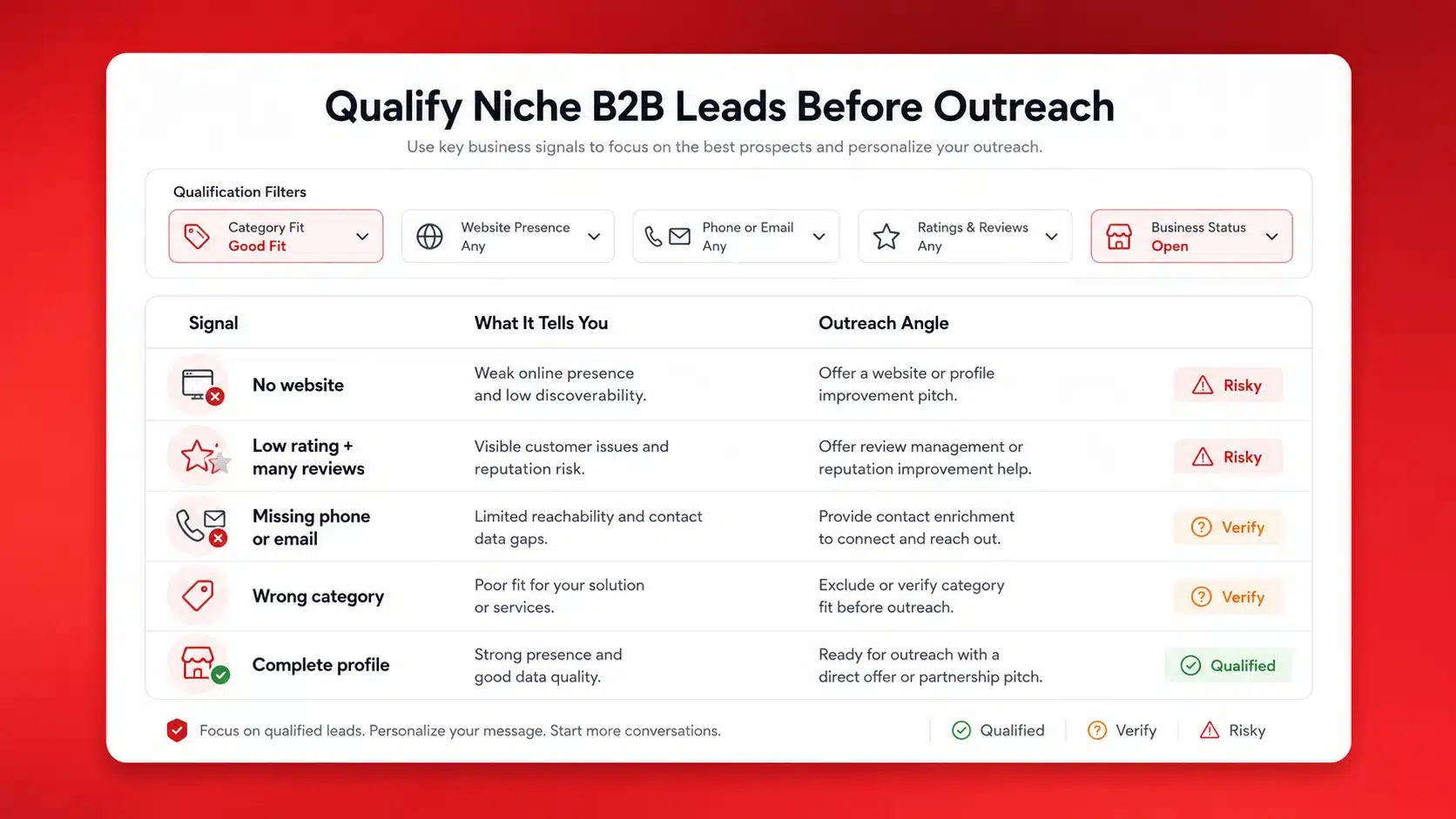
The goal is to qualify leads before outreach, not after. When you check these signals early, your final list becomes smaller, cleaner, and easier to personalize.
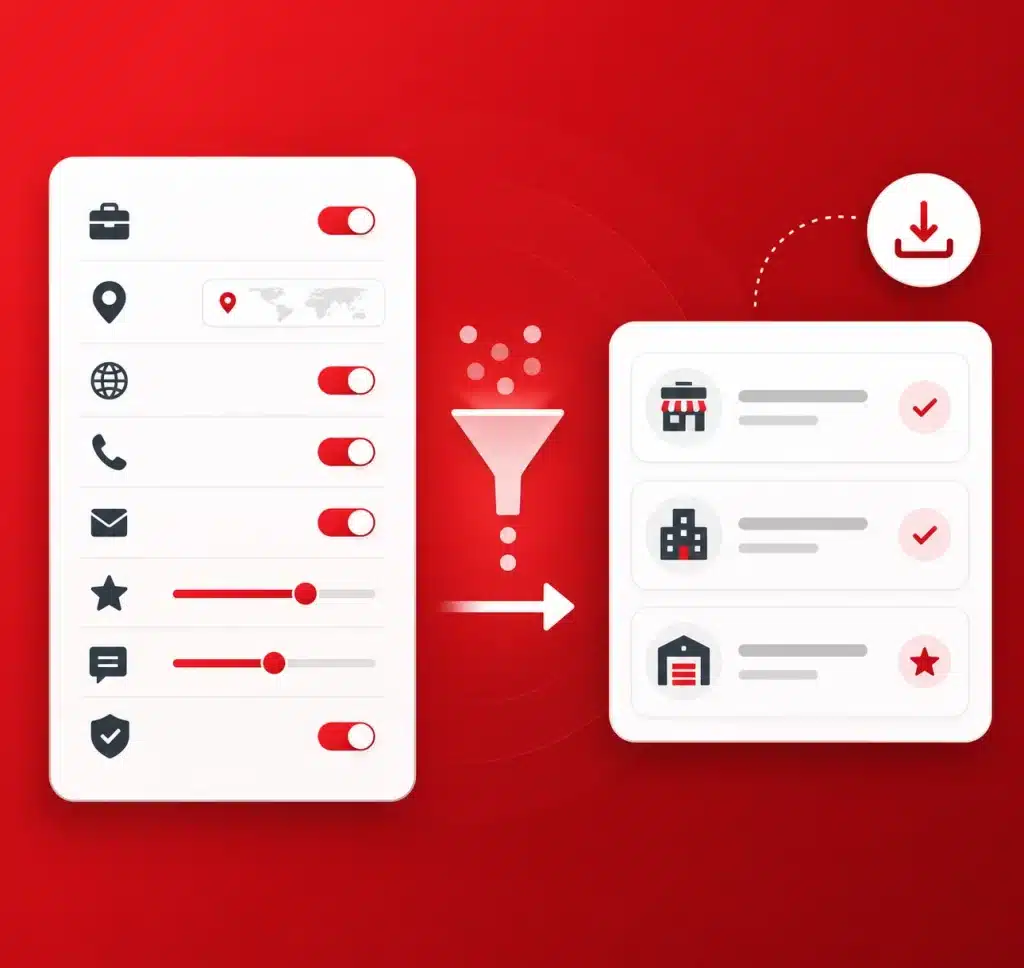
Use Targetron to filter businesses by category, location, website presence, contact availability, ratings, reviews, and business status before exporting your outreach list.
After choosing your niche, finding lead sources, and checking business signals, the next step is turning that research into a usable list. The goal is not to export every business you find. The goal is to build a cleaner list of companies that match your category, location, and outreach reason.
Targetron helps support this workflow by letting teams search by business category and location, apply filters, review business signals, and export leads that are more ready for outreach.
A structured B2B sales leads database is most useful when it lets teams filter by category, location, contact paths, and business signals instead of exporting a generic list.
Start with one specific business type instead of a broad market. For example, choose dental clinics, commercial cleaning companies, HVAC contractors, medical spas, local manufacturers, accounting firms, logistics providers, or specialty contractors.
A focused category makes it easier to check fit and remove irrelevant businesses.
Next, narrow the search by city, region, state, or service area. For example, “commercial cleaning companies in Dallas” is more useful than a broad list of “commercial cleaning companies.”
Location keeps the list focused on businesses your team can realistically serve.
Use filters to qualify the list before outreach. Check signals such as website presence, phone or email availability, ratings, review count, business status, and profile completeness.
These details help you find businesses that are active, reachable, and relevant to your offer.
Before exporting, remove wrong categories, duplicates, closed or inactive businesses, missing contact paths, incomplete profiles, and records with no clear outreach reason.
This keeps the final list cleaner and easier to use.
Export only the businesses that match your niche criteria. A smaller but more relevant list is easier to review, segment, and personalize.
The final list should help your team understand who the business is, where it operates, how to contact it, and why it may be worth reaching out to.
Use the strongest signal from each lead to shape your message.
For example:
This workflow keeps niche prospecting practical: choose the right category, narrow by location, qualify with signals, remove weak-fit records, and export a cleaner list your team can actually use.
Finding the right prospects in a small market is not about collecting the largest list. It is about knowing how to find B2B leads in niche industries by starting with the right category, narrowing by location, checking business signals, and exporting only the companies that match your offer.
With Targetron, your team can search niche businesses by category and location, filter by website presence, phone and email availability, ratings, reviews, and business status, then export a cleaner B2B lead list for outreach.
Most frequent questions and answers
The best way to find B2B leads in niche industries is to start with a specific business category, narrow the search by location, qualify companies using business signals, and export only the leads that match your offer. This helps your team avoid broad lists and focus on businesses that are more likely to be relevant.
Generic B2B lead lists often fail because they are too broad. They may include the wrong business categories, outdated records, missing contact details, inactive companies, or leads with no clear outreach reason. In niche industries, every weak-fit record matters because the market is smaller.
Before contacting a niche B2B lead, check category fit, location, website presence, phone or email availability, ratings, review count, business status, and profile completeness. These signals help you decide whether the business is active, reachable, and relevant to your offer.
Good niche industries for B2B lead generation include dental clinics, commercial cleaning companies, HVAC contractors, medical spas, local manufacturers, logistics providers, accounting firms, senior care providers, recycling and waste management companies, and specialty contractors. The best niche depends on your offer, service area, and target customer profile.
Targetron helps teams find niche B2B leads by allowing them to search businesses by category and location, apply filters, review business signals, check contact availability, and export cleaner lead lists. This makes it easier to build a focused list before outreach instead of cleaning a broad list afterward.
