Don't wait for a call—chat with our sales team now via WhatsApp!
When finding HVAC contractors, many people are driven by different goals. In fact, the U.S. HVAC contractor market was projected to reach $156.2 billion this year 2025, with over 117,000 HVAC businesses operating nationwide. This massive number makes search process more crowded and harder to organize but tools like Targetron helps simplify it.
People also want to understand what HVAC contractors do compared to air conditioning contractors. HVAC contractors work on heating, ventilation, and cooling systems as a complete environment. Air conditioning contractors focus only on cooling units. This difference shapes search behavior because many homeowners and businesses want a contractor who can solve issues across the entire system, not just one part.
One of the first things people check is whether the contractor covers their location. They want confirmation that the business actually operates in their city or service zone. Before contacting anyone, most users look at maps, service areas, and coverage notes to avoid reaching out to a company that does not handle their region.
People look closely at phone numbers, emails websites, and office listings. They want to make sure the details are current and active. Outdated contact information is common frustration, so reliable business data becomes a key part of the search.
Many users check ratings, reviews, years in operation, and signs that the company remains active. They look at proof of real work done in the area, steady customer activity, and a reputation that shows the contractor can handle ongoing service needs.
Searchers compare home, commercial, and industrial HVAC work. Some prefer independent contractors. they examine specialization to match the right provider with their needs.
Homeowners often look for repairs or system checks. They focus on availability, response time, and clear pricing. Most want a contractor who can look at both heating and cooling in one visit.
Many people search for HVAC contractors hiring near them. They study job openings, company size, salary data, and local demand to understand what opportunities look like in their area.
Finding reliable HVAC contractors is not always as simple as typing contractors near me into a search bar. People bounce between search engines, Google Maps, review platforms, and company websites just to confirm basic details. A directory designed for B2B research solves these gaps because it gathers scattered local data and turns it into one organized list.
Consumers often check several sources before they feel confident enough to contact a contractor. They scan search results, navigate maps, open review pages, and jump to business websites. Important details like service areas or operating hours are rarely consistent across platforms, which slows down decision making. A dedicated directory pulls these data into a single place so people do not waste time collecting them manually.
Search engines do not always clarify whether a local HVAC company is active, temporarily, closed, permanently closed businesses, recently opened, or no longer operating. Directories built for research offer clearer filters that separate operational businesses from outdated listings. This helps users focus only on contractors who are available right now.
Most search results show only basic public data info. Email addresses, deeper contact pages, and alternate phone lines often require extra digging. A research directory surfaces these contact fields in one view, which is helpful for customers, job seekers, and businesses trying to compare multiple contractors at once.
A simple local search does not always show the details that matter most. B2B directories give fuller context such as rating, review volume, nearby location indicators, service area coverage, website fields, and business categories. This helps users understand which companies actually fit their needs before they reach out.
People searching for HVAC services and individuals entering the trade both rely on clear and structured data. Customers look for service coverage, response times, and reputation signals. Job seekers check company size, hiring history, and salary indicators. On top of these groups, B2B businesses in the HVAC space rely on accurate listings to identify potential partners, subcontractors, and suppliers.
They use directories to verify operational status, compare specialties, and find companies that fit their project requirements. A research focused directory supports all three groups by placing service details, business attributes, and contact fields in one structured dataset.
1. Log in or Sign up: Create an account if you do not have one yet, then access the Targetron dashboard. You can also check our comprehensive tutorials on how to sign up and add funds to your account.
2. Open the Business Directory: Choose Your Location: Select Country, State, and City.
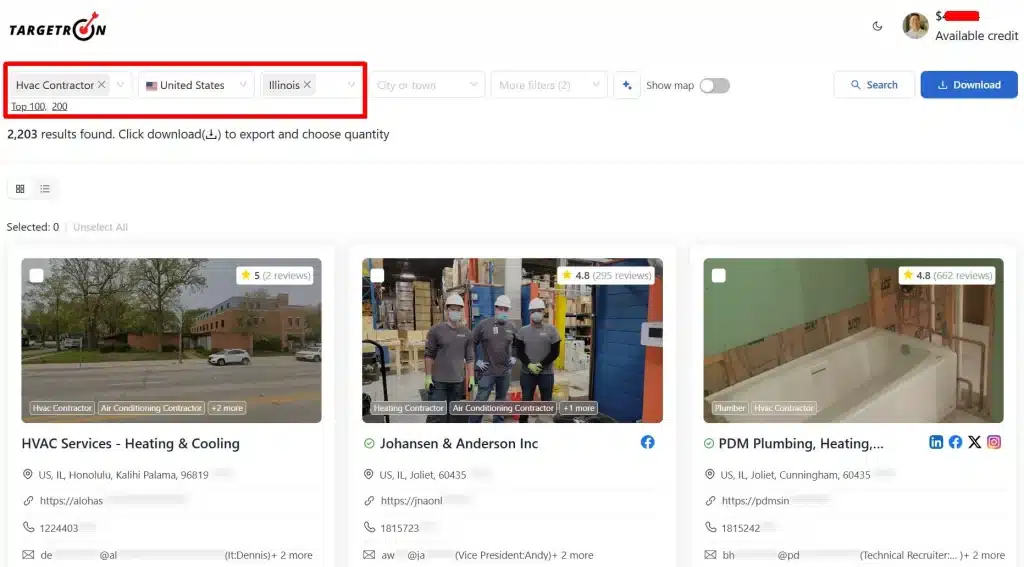
Selecting Locations of HVAC Contractors
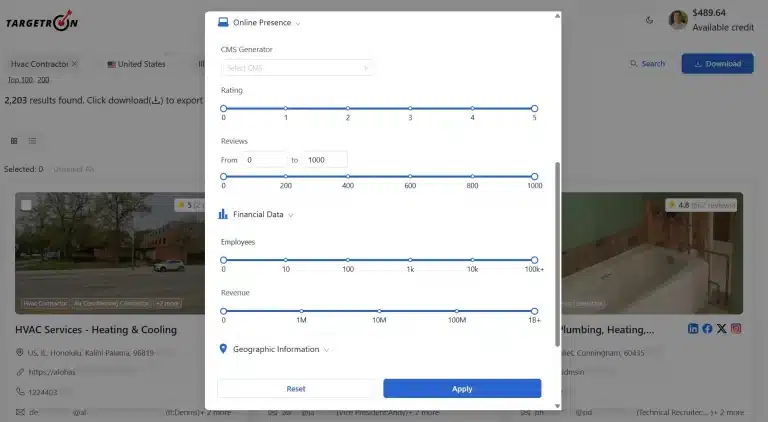
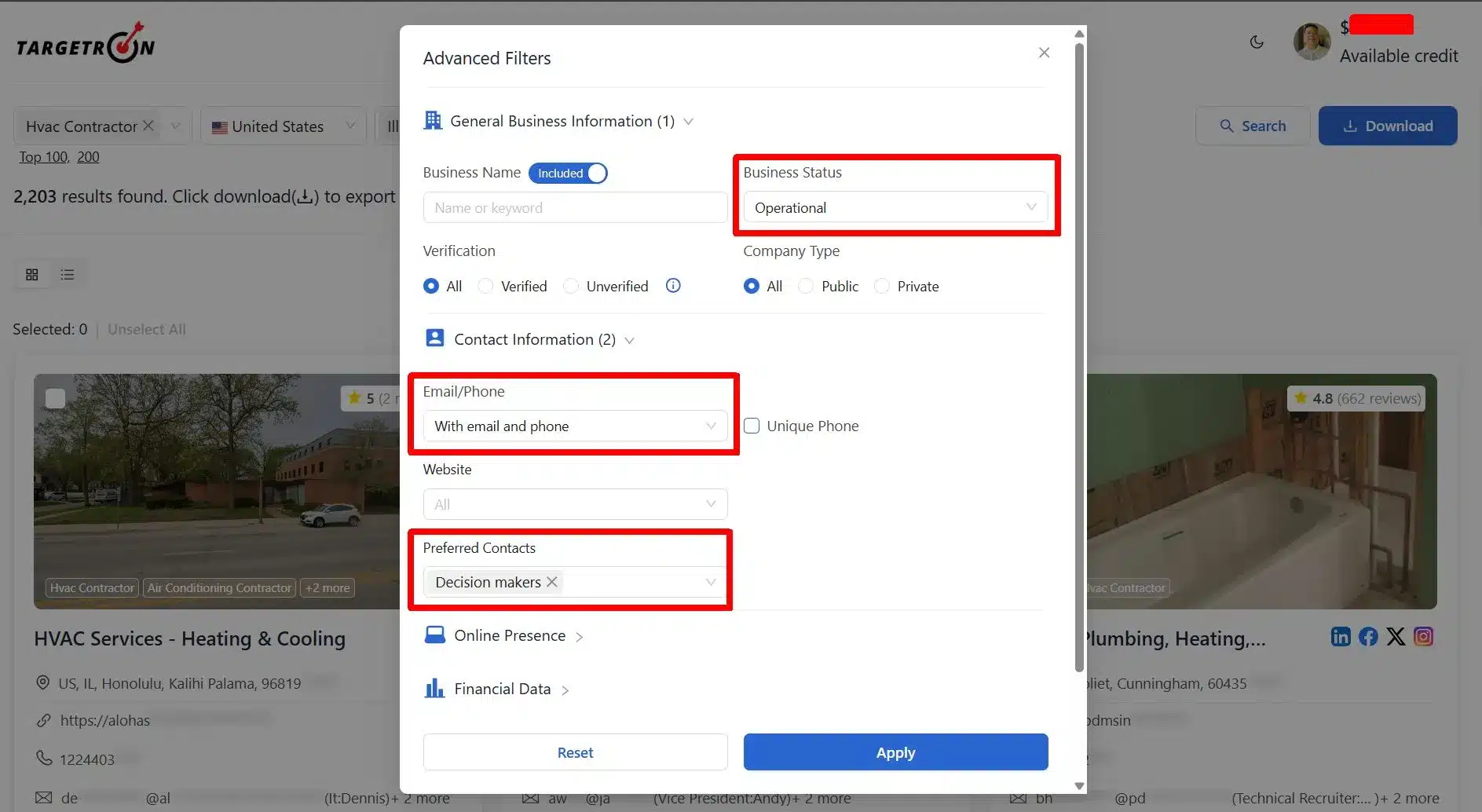
3. Open Advanced Filters: chose business status (Operational, Temporarily Closed, & Permanently Closed). You can also select the type of contacts details you want (With Email & Phone, With or Without website, add online presence and CMS filters. You can also apply ratings and review filters.
4. Additional Filters & Output: You can also add additional attributes such as postal code, service area attributes, and added data range if you want to get information about newly added companies.
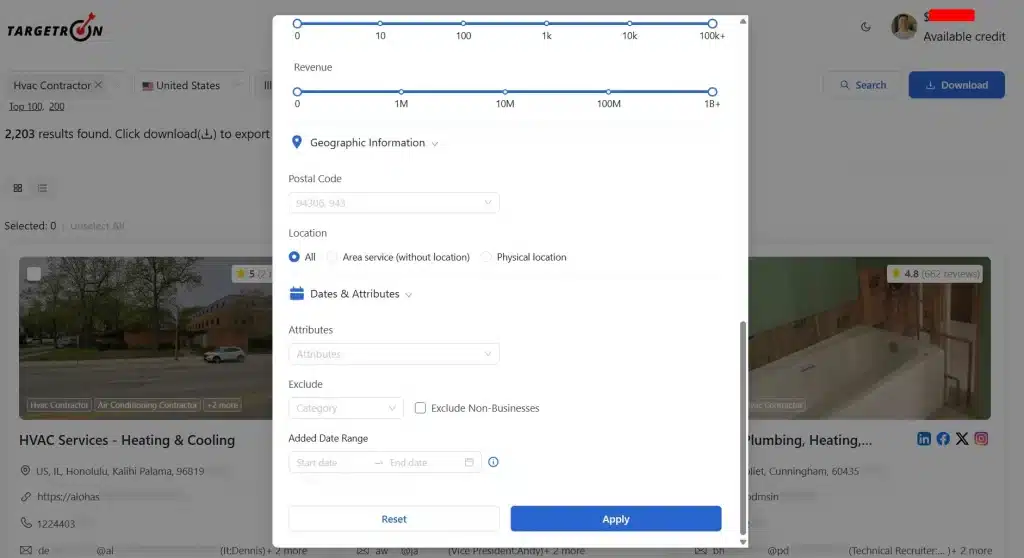
Check the Dates & Attributes Filters for Newly Established Businesses
5. Export the Data and Download the Results: After finalizing all the details, you can now choose the file types and download the result list. All the tasks and exports are available in the Export tab inside the Targetron dashboard.
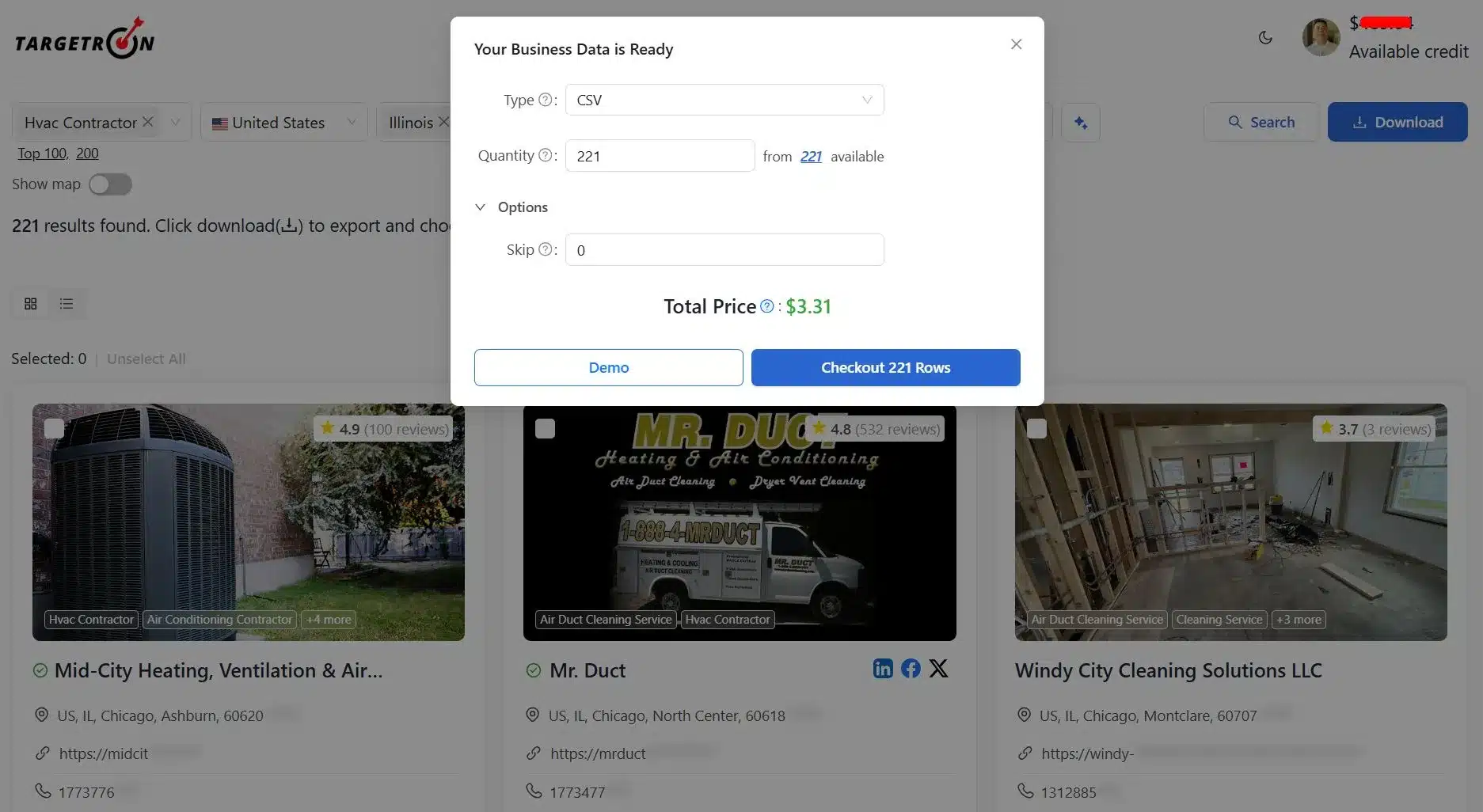
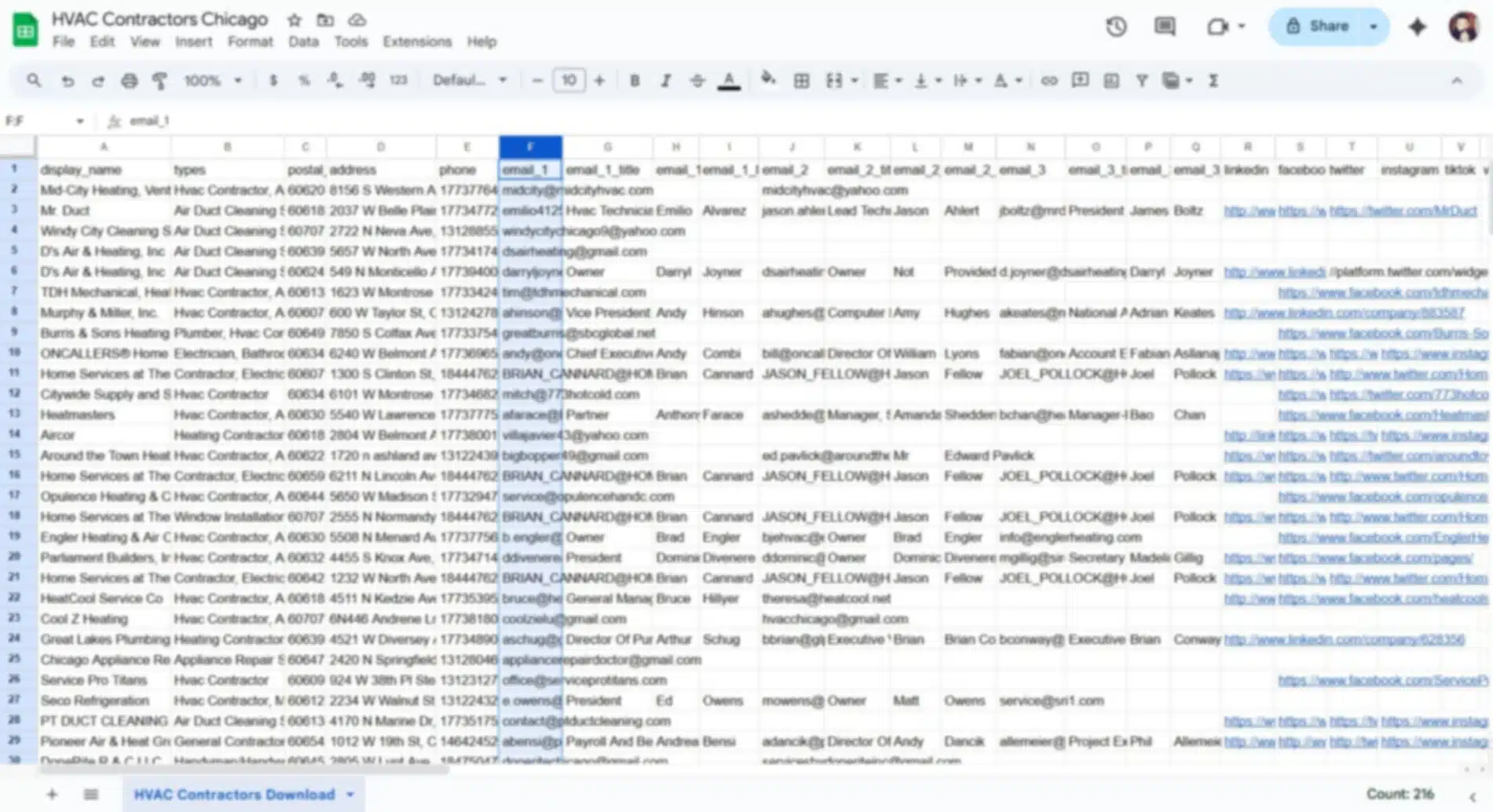
Here’s the sample data of HVAC Contractors in Chicago, Illinois:
Targetron positions itself as a better option and alternatives when compared to search engines and map platforms. Here are the reasons why:
1. Build for Filtering: It is designed for filtering decision not just broad browsing. You can sort HVAC contractors by location, size, revenue, ratings, review counts, platforms used, business status, and many other attributes.
2. Helpful for Both Individuals and Small Teams: Targetron supports anyone doing vendor checks, service evaluations, workforce research, or market scans. Individuals can use it to check local service providers or job prospects, and small teams gain a simple way to confirm business legitimacy and compare multiple companies without switching tools.
3. Clear Visibility on Newly Added HVAC Businesses: Targetron includes timestamped business entries, making it easier to identify newly added HVAC contractors or recently established companies. People who want smaller, emerging, or early stage HVAC businesses can spot them faster than they would on a standard map search.
Targetron supports real HVAC search needs, it focuses on clear use cases rather than broad claims, helping readers understand when the tool adds value.
Checking Multiple Contractors at Once: Targetron works well when you need to compare several HVAC contractors for repair, replacement, or maintenance. Instead of opening separate tabs for each provider, you can scan service coverage, contact fields, ratings, and operational status in one place.
Searching for Reliable Hiring Options: People searching for HVAC contractors hiring near them often want more than job titles. Targetron shows company scale, and contact options, which helps job seekers confirm whether a business is active and worth approaching.
Doing Early Market Research: It supports early research for contractors, resellers, and job seekers who want to understand who operates in their area. You can see the number of HVAC providers in your area, their company type or specialties, therefore providing a picture of the local HVAC scene before making decisions or planning outreach.
Finding HVAC contractors has become more complex as the industry grows, with thousands of providers offering different services, coverage areas, and levels of credibility. People move between maps, search engines, review sites, and company pages just to confirm basic information. Targetron brings this scattered data together and turns it into an organized view, helping users compare contractors, check business activity, and reach the right contacts faster.
Whether someone is a homeowner looking for repairs, a business researching partners, or a job seeker studying hiring options, the ability to filter by location, status, contact fields, service details, and company attributes makes the search process clearer and more efficient.
By offering structured business data and practical filtering tools, Targetron supports better decisions and reduces the time spent reviewing multiple sources.
Most frequent questions and answers
Targetron offers structured business data in one view, including contact fields, business status, ratings, revenue indicators, and company attributes. Search engines usually require multiple steps and websites to gather the same details.
Yes. Targetron allows you to filter businesses by operational status such as active, temporarily closed, or permanently closed. This helps avoid outdated listings.
Targetron provides expanded contact data when available, including email addresses, phone numbers, websites, and decision-maker contacts, which are often hidden in search results.
Yes. Job seekers use it to identify active companies, check company size, review presence indicators, and confirm whether a business is worth approaching.
Homeowners, businesses, job seekers, and B2B companies such as suppliers and subcontractors benefit from organized data, filtering options, and clearer business insights.